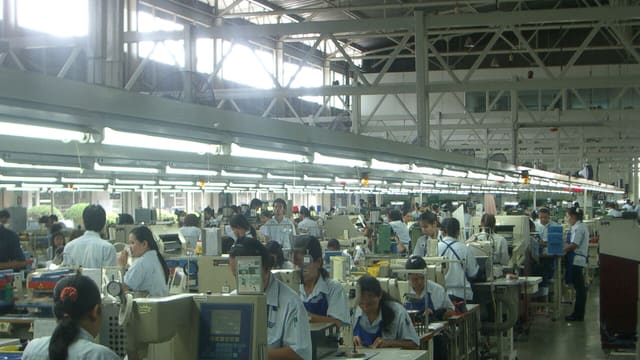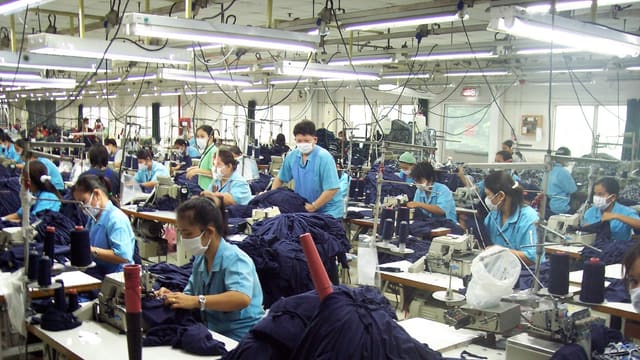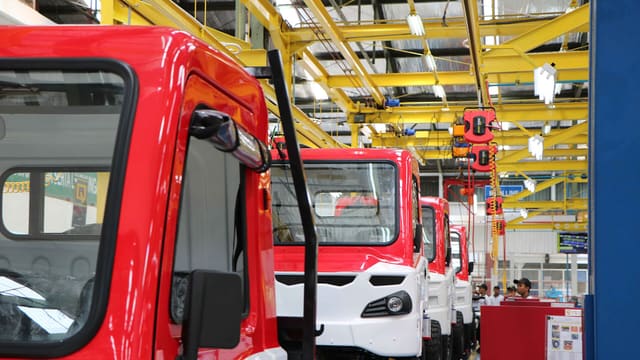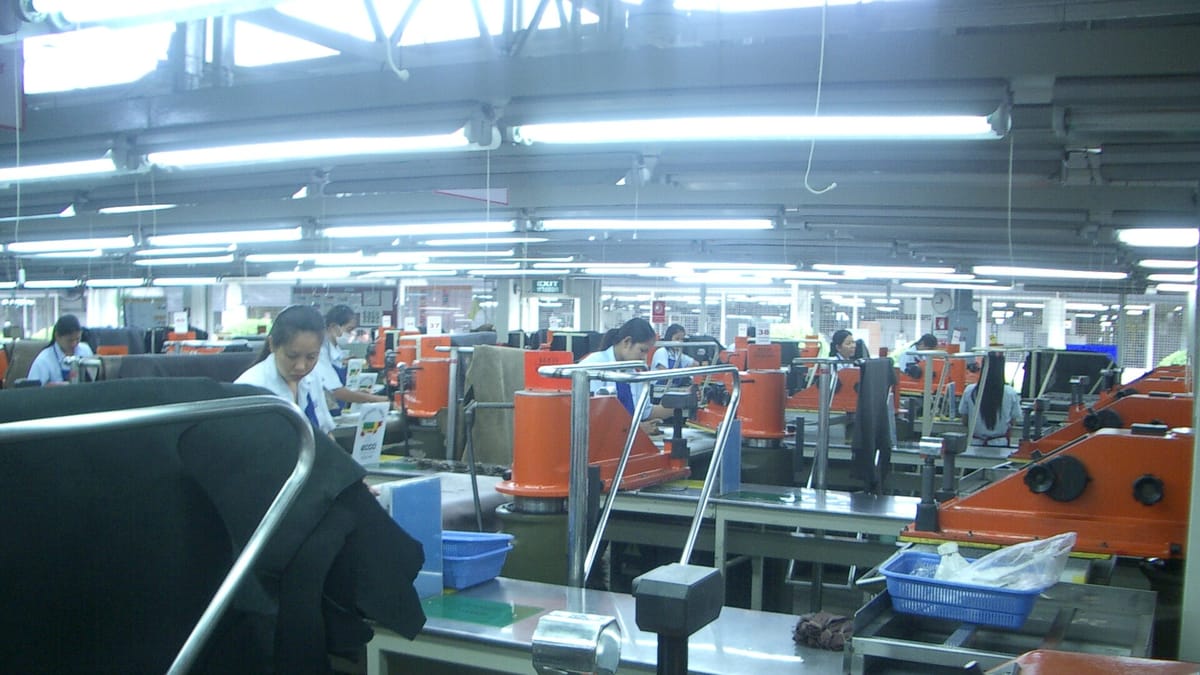
Malaysia's electrical and electronics (E&E) industry is one of the country's economic pillars. Penang and Kulim host semiconductor assembly and test plants, contract manufacturers, precision machining and automation suppliers. Johor, Selangor and other states add electronics, medical devices, rubber products and a large base of local SMEs supplying the multinationals. The industry is moving up the value chain — into more complex products, more automation and more design work — and that brings higher expectations of data.
The government's New Industrial Master Plan 2030 (NIMP 2030), launched in 2023, aims to grow manufacturing value added substantially by 2030 and has set a target of at least 3,000 smart factories. It builds on the earlier Industry4WRD policy for Industry 4.0 adoption. For a typical E&E plant, especially a local SME supplier, becoming a "smart factory" starts with a practical step: replacing paper travellers and spreadsheets with a manufacturing execution system (MES). This guide explains what an MES should do in a Malaysian electronics plant and how to approach it.
What an MES does in an E&E plant
In electronics manufacturing an MES is often called a shop-floor control system, and it typically covers:
- Route control: each product follows a defined sequence of steps, and a unit cannot skip a step or move on after a failed test.
- Serial and lot traceability: every unit or lot linked to its component reels, material lots, machines, operators and time stamps.
- Test and inspection data: results from in-circuit, functional and visual inspection stored against each serial number.
- Repair and rework: failed units logged with defect codes, repair actions and retest results.
- Material control: reel and lot verification at loading, shelf life and moisture-sensitive device (MSD) floor-life tracking.
- Yield, output and OEE by line, product, customer and shift, live.
Our introduction to what an MES is gives more background for readers new to the topic.
Why Malaysian E&E manufacturers invest in MES
Customers expect serial-level traceability
Multinational customers and brand owners increasingly ask suppliers for unit-level genealogy: for a field failure or a returned unit, they want to know which component lots, which machine settings and which test results apply. Without an MES, that answer is assembled by hand from travellers, test files and spreadsheets — if it can be assembled at all.
Yield is where profit is won or lost
In electronics, a small improvement in first-pass yield often matters more than a large improvement in speed. An MES that records defects consistently, by location and cause, gives engineers the data to find and fix the biggest yield losses rather than guessing.
Labour and workforce changes
The industry relies on a mix of Malaysian and foreign workers, and there is a long-running push to reduce dependence on low-skilled labour and raise wages. A system that guides operators step by step, verifies scans and catches errors makes it easier to train new staff and to get consistent results from a changing workforce.
Moving up from supplier to partner
Local SMEs that supply multinationals are often assessed on their systems as much as their prices. Being able to show live production data, traceability and quality records in an audit helps win larger and more complex work.
Requirements that matter in Malaysia
Multilingual, low-text screens
A single line might include operators who prefer Malay, English, Chinese, Nepali, Bengali or Burmese. Shop-floor screens should use scanning, colours, icons and short labels, with text available in each user's chosen language. Training material and work instructions can be attached in the same way.
High-mix contract manufacturing
Many Malaysian electronics plants are contract manufacturers running dozens of products for many customers. Routes, inspection plans, labels, reports and data retention rules must be configurable per customer, without custom programming for every new product.
Machine and tester integration
SMT lines, AOI machines, testers and other equipment hold valuable data. Many can export results in files or through standard interfaces; the MES should collect them automatically where possible and fall back to station entry where not. Integration is done machine by machine, starting with the steps that matter most for traceability and yield.
Clean rooms and controlled areas
For semiconductor back-end, medical device and other controlled environments, the MES may need to record environmental checks, gowning and line clearance, and restrict certain steps to qualified operators — with training records checked automatically before a person can sign in to a station.
ERP and customer portals
Work orders usually come from an ERP, and finished output, scrap and material consumption go back to it. Some customers also want regular data feeds or reports. These links are built where the systems involved offer an API, database connection or file exchange.
Smart-factory steps that make sense for SMEs
Smart-factory programmes can sound like a long shopping list of technologies. For most SMEs, a realistic sequence looks like this:
- Digitise the traveller: work orders, route steps and output recorded on terminals or tablets instead of paper.
- Add traceability: scan component reels and material lots to each job; label each unit or lot.
- Capture quality data: inspection and test results, defects and repairs per unit or lot.
- Connect key machines for automatic counts, status and test results.
- Use the data: daily yield and downtime reviews, Pareto charts of defects, and customer reports generated automatically.
- Extend: maintenance, energy monitoring, predictive analytics and deeper automation, built on reliable data.
Each step pays for itself before the next one starts. Our MES implementation roadmap describes this approach in more detail.
Example: a contract manufacturer in Penang
Consider an electronics contract manufacturer with three SMT lines, manual assembly and test, serving eight customers. Each product had a paper traveller; test results were saved on the test PCs; and customer traceability reports were compiled by an engineer in Excel, taking a day or more per request.
The first phase replaced the traveller with a barcode-driven route: each board gets a serial label at the start, and each station scans it. Reels are scanned at loading and verified against the bill of materials. Test results are collected automatically from the testers' output files and linked to the serial number. A board that failed test cannot be scanned into packing.
Customer traceability requests that took a day now take minutes. Defect data, recorded consistently for the first time, showed that most rework on one product came from a single soldering issue that engineers could fix. The second phase added MSD floor-life tracking, customer-specific reports and links to the ERP.
Packaged or custom MES?
Large packaged MES products are designed for global multinationals and can be expensive and slow to configure for an SME. Lighter products may not handle your customers' specific requirements. A custom MES, built around your products and processes and extended step by step, is often the better fit for local manufacturers and mid-sized contract manufacturers. Whichever route you choose, ask to see a realistic demo with your own product route and data.
Material control: reels, MSDs and shelf life
In electronics assembly, many of the most expensive mistakes are material mistakes: a wrong reel loaded on a feeder, a moisture-sensitive component left exposed too long, or solder paste used after its life. An MES prevents these with simple, enforced checks:
- Reel identification: every reel gets a unique ID label at receiving, linked to the manufacturer's part number, lot and date code, so the same part from two lots can be told apart.
- Feeder loading verification: when a reel is loaded or spliced, the operator scans the feeder slot and the reel; the system checks it against the program and bill of materials and blocks a mismatch.
- MSD floor life: for moisture-sensitive devices, the system starts the clock when a bag is opened, counts exposure time by level, warns before the limit and records baking or dry-storage resets.
- Shelf-life items: solder paste, adhesives and chemicals carry expiry and thaw or open times; expired items cannot be issued.
- Reel-level traceability: because each reel is linked to the boards it was used on, a supplier quality alert on one component lot can be traced to the exact serial numbers affected.
These checks take seconds per action but remove an entire category of defects and customer complaints. They also generate the evidence customers look for when they audit material handling.
For plants with automated storage or smart racks, the MES can exchange reel locations and requests with those systems. For plants without them, a simple barcode-labelled rack system with scan-in and scan-out gives most of the benefit at far lower cost.
Questions to ask any MES supplier
- Can each operator use the system in their own language?
- How are customer-specific routes, inspection plans and labels configured?
- Which of our machines and testers can be connected, and how?
- How long does a full serial-number trace take in a realistic demo?
- How does it exchange data with our ERP and customers?
- What does the first phase deliver, in what time and at what total cost?
- Who owns the code and data, and how is support provided?
Working with Corposol
Corposol builds custom MES, traceability and factory software for manufacturers, starting with a focused first phase and extending it as your needs grow. We work remotely through workshops, short demo cycles and shared project tracking; Malaysia's working day overlaps well with India's. All custom code is transferred to you on final payment. If you are planning smart-factory steps for your plant, we would be happy to discuss where to start.
Frequently asked questions
What does an MES do in an electronics factory?
It tracks every unit or lot through each process step, records which components and materials were used, stores test and inspection results, enforces the correct route, and shows live output, yield and downtime. It is the system that answers 'what happened to this serial number?'
Can an MES support several languages for a mixed workforce?
Yes. Each user can work in their own language — for example Malay, English, Chinese or the languages of foreign workers — while the data is stored once. Screens should rely on scanning, icons and short labels to keep language barriers low.
Is an MES required to become a smart factory under NIMP 2030?
There is no single required product. But reliable, real-time production data is the foundation of almost every smart-factory step, and an MES is the usual way to collect it. Check current incentive and programme criteria with MIDA or MITI.
Can the MES connect to our test equipment and SMT lines?
Often, yes. Many machines and testers export results as files or through an interface the MES can read. Where a direct link is not possible, results can be uploaded or entered at the station. We confirm what is possible machine by machine.
We are a contract manufacturer with many customers. Can the MES handle different requirements?
Yes. Routes, inspection plans, labels and reports can be configured per customer and per product, and customers can be given their own reports or portal access if needed.
Does Corposol work with manufacturers in Malaysia?
Corposol builds custom MES and factory software and works with clients internationally through remote delivery, video demos and shared project tracking. Malaysia is two and a half hours ahead of India, so our working days overlap well.