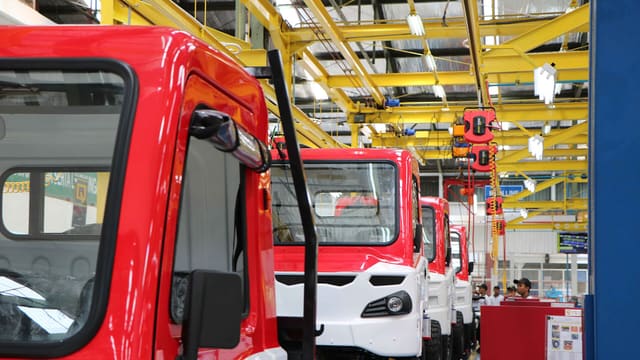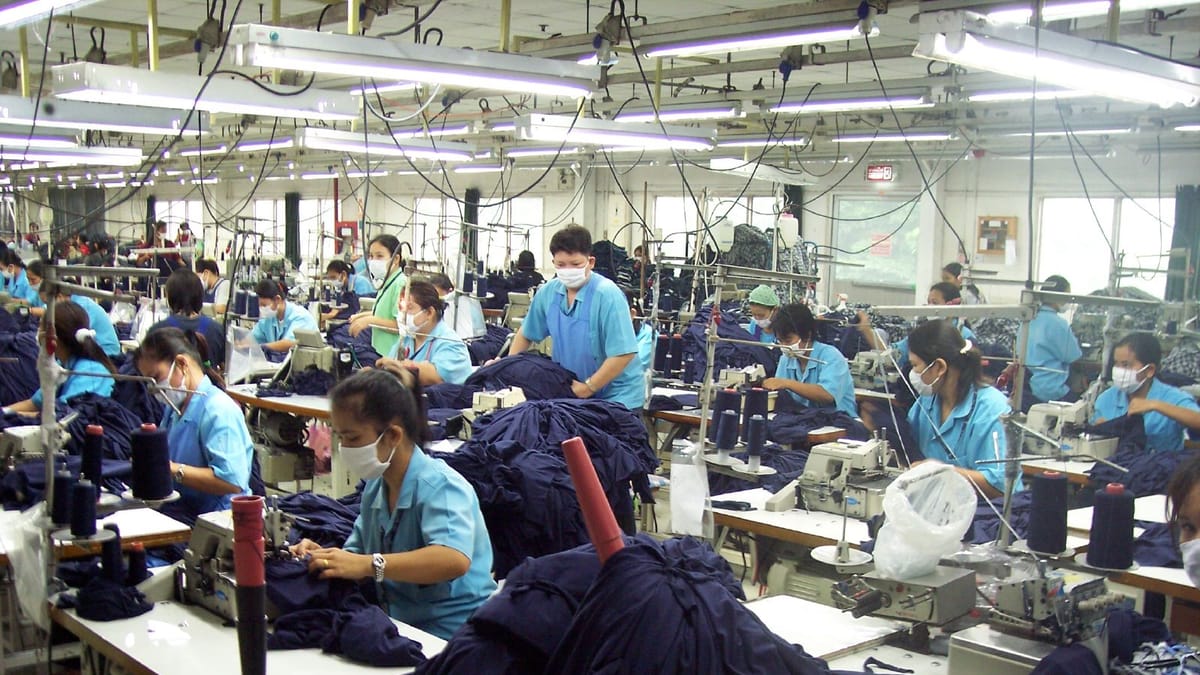
Vietnam has become one of the world's great export workshops. Electronics plants cluster in Bac Ninh, Bac Giang and around Hai Phong in the north. Furniture, garment, footwear and packaging factories fill the industrial parks of Binh Duong, Dong Nai and the provinces around Ho Chi Minh City. Food processors, coffee and rubber exporters, and a fast-growing base of component suppliers sit in between. Manufacturing and processing make up the great majority of the country's export value, much of it from foreign-invested companies.
That success comes with scrutiny. Buyers in the EU, the United States, Japan and Korea audit their suppliers, ask detailed questions about where materials come from, and expect complaints to be traced and closed quickly. For many Vietnamese factories, traceability and quality data is now part of the product. This guide explains what good traceability and quality software looks like for an export factory in Vietnam, and how to put it in place without disrupting production.
What buyers are asking for
Lot traceability, backward and forward
The basic question is always the same: for this carton, pallet or shipment, which materials, machines and people were involved, and which checks did it pass? And the reverse: if one raw-material lot is suspect, which shipments contain it? A factory that answers in minutes keeps the buyer's confidence. A factory that needs three days and a search through paper often loses the next order.
Origin and supply-chain data
EU rules have raised the bar for supply-chain data. The EU Deforestation Regulation (EUDR) covers commodities such as wood, rubber, coffee, cocoa, soy, cattle and palm oil, and products made from them — which brings furniture, rubber goods, packaging, tyres and some processed foods into scope. The EU has classified Vietnam as a low-risk country, which means lighter checks, but only when exporters provide complete documentation and traceability. The Carbon Border Adjustment Mechanism (CBAM) asks importers of goods such as steel, aluminium and cement for emissions data from producers, and its scope may widen. Even where a regulation does not apply directly, buyers pass similar questions down their supply chains.
Quality records and corrective action
Buyers expect inspection results for incoming material, in-process checks and final inspection, with non-conformances recorded and corrective actions closed. Many audit findings are about missing or inconsistent records rather than bad product.
Social and safety compliance
Garment, footwear and furniture buyers also audit working hours, overtime, training and safety. Production software is not a payroll system, but a record of who worked on which job and for how long helps make working-time evidence consistent with output.
How traceability works on the shop floor
Traceability is built from a small number of recorded events. The software's job is to make each one quick and hard to skip:
- Receiving: each incoming material gets a lot number and label, linked to the supplier, purchase order, supplier documents and, where relevant, origin data such as harvest plot or forest certificate.
- Incoming inspection: the lot is released, held or rejected, with results attached.
- Issue to production: operators scan the material lot labels against the production order, so the system knows exactly what was used.
- Production: output is recorded in lots or batches, with machine, shift, operator and in-process checks.
- Packing: cartons and pallets get labels linked to the production lot.
- Shipping: pallets are scanned to the shipment and invoice.
With those six events recorded, the system can draw the full family tree — the lot genealogy — of any product. Our article on lot genealogy and recalls explains the concept in more depth.
Requirements that matter in Vietnam
Vietnamese on the floor, other languages in the office
Operators, storekeepers and QC inspectors should work in Vietnamese, with screens designed for scanning and tapping, not typing. Many factories are owned by Korean, Japanese, Chinese or Taiwanese groups, so managers and head-office engineers may need the same data in their own language. A well-built system stores data once and shows each user their preferred language.
Barcodes and QR labels that survive the factory
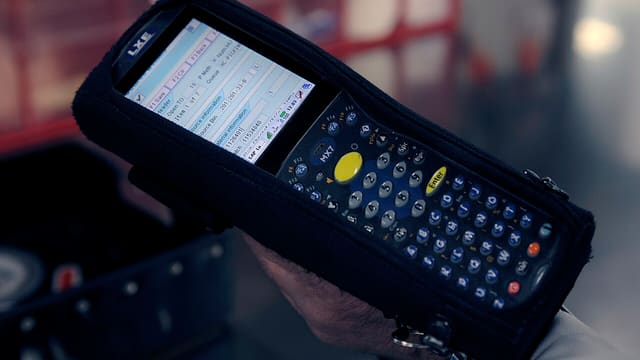
Labels need to survive dust, humidity, cold rooms or outdoor yards. The system should print labels from the line or store, read barcodes with handheld scanners or phone cameras, and refuse a scan that does not match the production order — the single most effective control against mix-ups.
Buyer-specific requirements
One factory may ship to several brands, each with its own label format, inspection plan, AQL sampling level and document pack. The software should let you set these per customer and produce the right documents automatically with each shipment.
Subcontractors and outsourced processes
Vietnamese supply chains often rely on subcontractors for processes such as plating, painting, embroidery, printing or sub-assembly. Traceability must survive the trip out and back: materials sent, quantities returned, losses and the subcontractor's own checks.
Working with ERP and customs records
Larger factories run an ERP; many also manage customs records for imported materials processed for export. Traceability software can exchange lots, consumption and output with these systems where they offer an API or export, so the same numbers appear everywhere.
Quality management that buyers trust
Traceability answers what went where. Quality software answers was it right, and what you did when it was not. The core pieces are:
- Inspection plans per product and customer: what to check, how many samples, and the limits.
- Digital checklists and measurements at incoming, in-process and final inspection, with photos.
- Non-conformance reports (NCRs) raised directly from a failed check, linked to the lot and put on hold automatically.
- Corrective and preventive action (CAPA) with owners, due dates and evidence of closure.
- Customer complaints linked straight to the traced lots, so the investigation starts with facts.
- Supplier quality scores built from incoming inspection results.
When an auditor asks "show me your last three customer complaints and what you did", the answer is a screen, not a folder.
Example: a furniture exporter in Binh Duong
Imagine a wooden furniture maker with 600 workers shipping to EU and US retailers. Timber arrives from several importers and local suppliers, with certificates and origin documents. Parts are cut, machined, sanded, assembled, finished and packed across several workshops, with some finishing sent to a subcontractor.
Before the system, origin documents were kept in email folders, and production records were paper job tickets. When an EU buyer asked for the timber origin of a specific container, it took the planning team most of a week to reconstruct.
The first phase introduced lot labels at timber receiving, with documents attached to each lot; scanning of timber lots to cutting orders; labels on each batch of parts; and carton labels linked to production batches and containers. Origin and supplier documents for any container could then be pulled into a single report. A second phase added final inspection checklists by customer, NCRs and complaint handling. The buyer's next audit focused on how the system worked rather than on missing records.
Getting started without stopping production
- Map the flow of one product family from receiving to shipping, and note where lot identity is lost today.
- Start at receiving and shipping: labelled incoming lots and scanned shipments give immediate value.
- Add the production link — scanning materials to orders and labelling output — line by line.
- Bring in quality: inspection checklists, NCRs and complaints, linked to the lots you are now tracking.
- Connect ERP once the data on the floor is reliable.
Run a mock recall early: pick a raw-material lot and see whether the system finds every shipment. It is the best test of whether the design works.
How to measure whether your traceability works
Traceability is easy to claim and hard to prove. Buyers increasingly test it, and the best factories test it themselves first. Five measures tell you whether your system is doing its job:
| Measure | What it shows | A healthy target |
|---|---|---|
| Trace time | How long a full backward and forward trace takes from a finished lot or shipment | Minutes, not hours |
| Trace completeness | The share of finished lots with a complete chain back to every raw-material lot | Close to 100% for products made after go-live |
| Scan compliance | The share of material issues and packing steps recorded by scan rather than typed or skipped | Rising every month towards all steps |
| NCR closure time | Average days from raising a non-conformance to closing its corrective action | Falling, with no actions left overdue |
| Complaint response time | Days from a buyer complaint to a first answer with traced lots and containment | Within the buyer's required response time |
Run a mock recall every quarter: choose a raw-material lot at random, trace it forward to every shipment, and time the exercise. Record the result as you would a real audit. Gaps found in a mock recall — a subcontractor step with no scan, a rework batch that lost its lot number, a carton label printed by hand — are far cheaper to fix than gaps found by a buyer.
It also helps to report these measures to buyers proactively. A supplier that shares its trace time and NCR closure figures at a quarterly review is signalling control, and buyers notice.
Questions to ask before you choose software
- Can operators and QC staff work entirely in Vietnamese?
- Can each customer have its own labels, inspection plans and document packs?
- How does the system handle subcontracted processes and partial returns?
- How long does a full backward and forward trace take in a demo with realistic data?
- How will it exchange data with our ERP and customs records?
- Who owns the software and data, and how is support provided?
Working with Corposol
Corposol builds custom traceability, quality and MES software designed around how your factory and your buyers actually work. We deliver remotely through workshops, short demo cycles and shared project tracking, and Vietnam's working day overlaps almost entirely with ours. We do not promise that software makes a product compliant — that depends on your supply chain and the rules that apply — but we build the system that keeps your evidence complete and quick to find. All custom code is transferred to you on final payment.
Frequently asked questions
What is lot traceability in a factory?
It is the ability to trace any finished product back to the raw-material lots, machines, people and checks involved in making it, and forward from any raw-material lot to every shipment that contains it. It is what lets you answer a buyer's complaint or a regulator's question in minutes rather than days.
Can traceability software help with EUDR requirements?
Software can keep the supplier, origin and lot records an EU buyer asks for, and link them to each production batch and shipment. Whether a product complies depends on its supply chain and the regulation itself; the software makes the evidence complete and quick to produce.
Can operators use the system in Vietnamese?
Yes. Operator and inspector screens can be in Vietnamese, with English, Korean, Chinese or Japanese available for managers and foreign head-office staff. Each user picks their own language.
We already have ERP. Do we still need traceability software?
Often, yes. Many ERP systems record purchases and sales by item but not which raw-material lots went into which production batch. A traceability or MES layer records that link on the shop floor and can exchange data with ERP where it offers an API or export.
How quickly can we trace a complaint once the system is live?
For products made after go-live, a backward and forward trace normally takes a few minutes: search the finished lot or shipment, and the system shows the full chain. Earlier products are only as traceable as the paper records that exist for them.
Does Corposol work with manufacturers in Vietnam?
Corposol builds custom traceability, quality and MES software and works with clients internationally through remote delivery, video demos and shared project tracking. Vietnam is 90 minutes ahead of India, so our working hours overlap almost entirely.