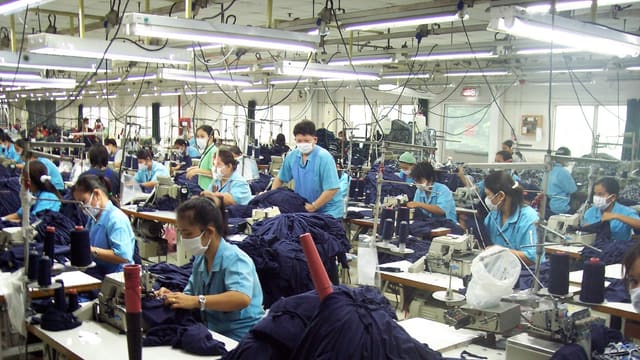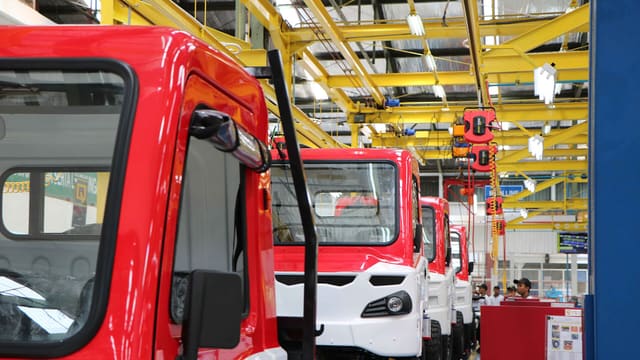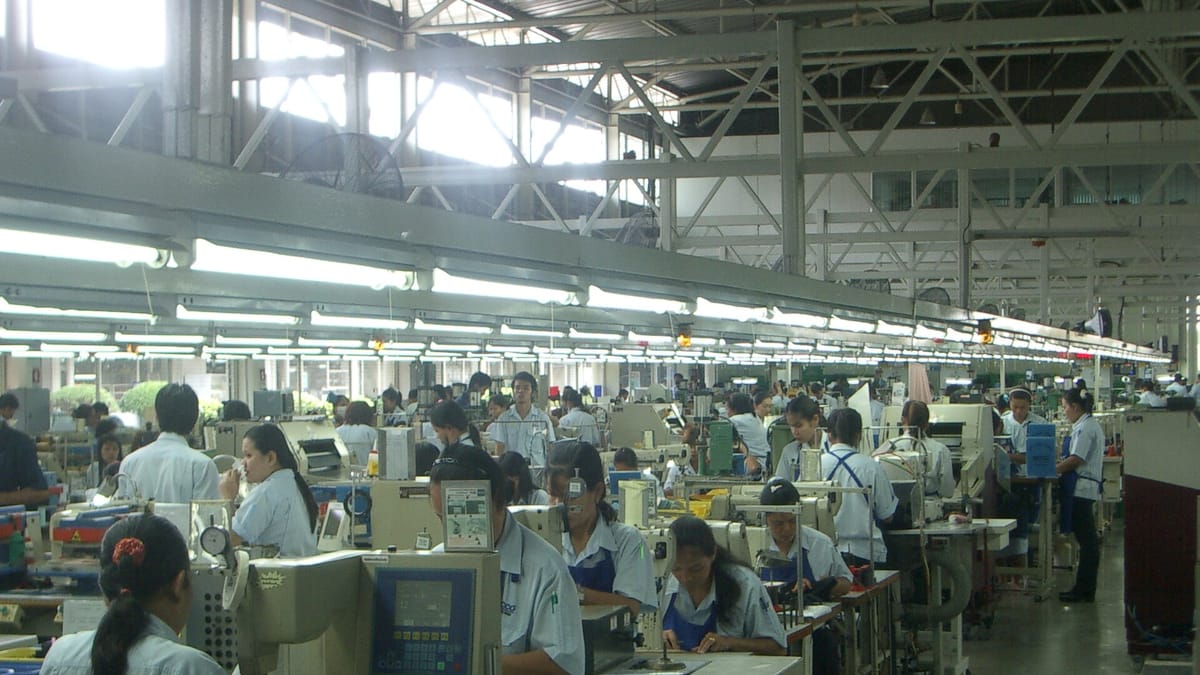
Thailand is South-East Asia's largest car producer and one of the region's most important electronics and electrical manufacturing bases. Thousands of component suppliers — stamping, machining, plastics, rubber, wiring harnesses, electronics assembly — surround the assembly plants in Chonburi, Rayong and Chachoengsao, the provinces of the Eastern Economic Corridor (EEC), and in the industrial estates around Bangkok and Ayutthaya. The arrival of electric-vehicle makers, many of them Chinese, is bringing new customers, new parts and new quality expectations.
In many of these plants the machines are modern but the information around them is not. Job cards are printed and filled in by hand. Machine stops are written on a whiteboard. Production and quality reports are assembled in Excel at the end of the day. Factory automation software tackles that information layer. This guide explains what it covers, where it pays off in Thai auto-parts and electronics plants, and how to roll it out.
Automating the factory's information, not just its machines
When people hear "factory automation" they think of robots and conveyors. But a plant can have excellent machines and still lose hours every day to manual information work: walking to find out whether a job is finished, retyping paper reports, chasing signatures for a deviation, or asking maintenance by phone whether a die is ready. Factory automation software removes that work:
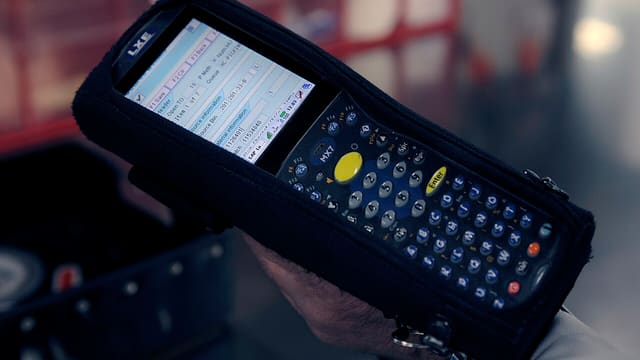
- Digital job cards on tablets or terminals at each machine or cell.
- Automatic machine data: cycle counts, running and stopped status and, where useful, process parameters.
- Production flow tracking: where every job and batch is, how much is waiting at each step, and what is late.
- Andon and alerts: when a line stops or a check fails, the right person is notified straight away.
- Digital quality checks with limits, photos and automatic holds.
- Approval workflows for deviations, engineering changes, rework and concessions.
- Automatic reports and dashboards for supervisors, managers and customers.
Where it pays off in Thai auto-parts plants
Customer delivery and traceability demands
Car makers and tier-1 suppliers expect on-time delivery to tight schedules and full traceability when something goes wrong. A supplier that can show which coil, resin lot, machine, die and shift produced a suspect part — and contain the problem to specific lots — avoids sorting or recalling everything.
IATF 16949 and customer-specific requirements
Automotive suppliers work under IATF 16949 and each customer's own requirements. Audits examine control plans, process parameters, first-piece and in-process inspection, non-conformances, corrective actions, preventive maintenance and tool life. Paper records are where findings come from: a missed signature, an unrecorded parameter, a check done but not written down. Software makes required steps hard to skip and keeps the evidence together.
Changeovers and tool management
High-mix stamping and moulding plants change dies and moulds many times a day. Recording changeover start and end, tool shot counts and tool condition automatically shows where time goes and when a tool needs maintenance before it causes defects.
New EV programmes
EV battery, motor and electronics parts often come with stricter traceability — sometimes down to each individual part's serial number — and more process data per part. Suppliers bidding for these programmes are frequently asked how they will capture that data.
Where it pays off in electronics plants
Electronics and electrical plants — PCB assembly, components, appliances, hard-disk and semiconductor back-end operations — face their own pressures: serial-number traceability, test results stored per unit, fast model changes, and strict control of moisture-sensitive materials and component reels. Factory software can link each unit's serial number to its components, test data and rework history, and stop a unit moving to the next step if a test was missed or failed.
Requirements that matter in Thailand
Thai-language screens and reason codes
Operators should work in Thai, with screens designed for gloved hands, quick taps and scanning. Reason codes for downtime and defects should be written with your own supervisors and engineers. Managers and Japanese, Chinese or European head-office staff can see the same data in their own language.
A mix of old and new machines
Most plants run a mix: new presses and moulding machines with modern controllers alongside equipment that is twenty years old. The software must collect what it can automatically and let operators enter the rest, so every machine appears on the same dashboard.
Multi-plant and group reporting
Companies often run several plants across the EEC and central Thailand, or report to a regional head office. Each plant needs its own lines, shifts and calendars, with consolidated reports for management.
Investment promotion and upgrades
Thailand's Board of Investment (BOI) has offered measures that support upgrades towards smart and sustainable manufacturing, alongside incentives for EV parts and projects in the EEC. Rules and eligibility change, so check current terms with the BOI or a qualified adviser. If you plan to apply, a clear description of the system, its scope and its expected productivity benefits is helpful, and we can provide technical documentation for the software we build.
Production flow: seeing the whole factory
Machine dashboards show whether each machine is running. Flow management shows whether the factory is working: how much work-in-progress is queued in front of each process, which jobs are late, and where the bottleneck is today. In a typical stamping-welding-painting-assembly flow, the bottleneck moves with the product mix. A live view of queues and late jobs helps supervisors move people and prioritise jobs before a customer delivery is missed. Our guide to WIP tracking explains how to set this up.
Example: a tier-2 plastics supplier in Rayong
Consider a plastics moulder with 40 injection moulding machines supplying interior parts to two car makers and an appliance brand. Before automation, operators wrote counts on paper every two hours, mould changes were recorded in a logbook, and the plant manager compiled OEE once a month from incomplete data.
The first phase connected the 15 busiest machines to collect cycle counts and running status automatically, put a tablet at each machine for job start, rejects and downtime reasons in Thai, and put a dashboard on the shop-floor screens and managers' phones. Mould shot counts were updated automatically, with maintenance alerts at set intervals.
Within weeks, the data showed that two machines were losing more than an hour per shift to waiting for material and that one mould accounted for a large share of short shots. Fixing those problems needed no new equipment. The second phase added resin-lot scanning for traceability, first-piece approval on the tablet, and automatic transfer of finished-goods output to the ERP.
How to roll out factory automation software
- Choose a pilot area — the bottleneck line or the customer with the most demanding requirements.
- Agree the data: job states, downtime and defect reasons, checks and alerts, written with the people who will use them.
- Start with tablets and simple machine signals; add deeper machine integration later.
- Make the dashboard public on the shop floor. Visibility changes behaviour.
- Use the data in daily meetings so people see that recording it matters.
- Expand line by line, then add traceability, quality workflows and ERP links.
Building the business case in hours, not just money
Owners rightly ask what factory automation software will return. The most reliable way to answer is to count hours, because hours can be measured before and after, and every plant can put its own value on them. Four sources usually dominate:
- Recovered production time. If a moulding or stamping cell loses 45 minutes per shift to undocumented stops, waiting for material or slow changeovers, recovering even a third of that across 20 machines and three shifts adds roughly 15 machine-hours of capacity a day — often enough to avoid overtime or delay buying another machine.
- Administration time. Count the hours spent each day typing paper reports into Excel, compiling OEE, preparing customer reports and searching for records before audits. In a mid-sized plant this is commonly several people's time, which can move to analysis and improvement.
- Scrap and rework. Consistent defect recording by machine, mould and shift shows where scrap comes from. A small percentage reduction in scrap on high-volume parts is usually worth more than the software's running costs.
- Containment and sorting. When a customer finds a defect, precise traceability lets you contain specific lots instead of sorting weeks of production, and avoids the charges customers apply for sorting at their sites.
Measure each of these for two to four weeks before the project starts — even roughly, on paper — so the improvement can be shown afterwards. Our guide to the MES business case explains how to turn these figures into a clear case for management or a parent company.
Be wary of business cases built on large percentage OEE gains promised in advance. Real gains come from what the data reveals and what your team does about it, and they arrive line by line.
Questions to ask any supplier
- Which of our machines can be connected, how, and what hardware is needed?
- Can operators work entirely in Thai, and can we change reason codes ourselves?
- How will the system handle our customers' traceability and IATF 16949 records?
- What happens on the floor during a network outage?
- How does it exchange data with our ERP?
- What does the first phase include, how long will it take and what is the total cost?
- Who owns the code and data, and how is support provided?
Working with Corposol
Corposol builds custom factory automation, MES and production tracking software for manufacturers, starting with the problems that cost you most and growing from there. We work remotely through workshops, demos and shared project tracking, with a working day that overlaps Thailand's almost entirely. All custom code is transferred to you on final payment. If your machines are modern but your information still lives on paper, we would be glad to talk.
Frequently asked questions
What is factory automation software?
It is software that removes manual work from running a factory: digital job cards instead of paper, machine data collected automatically, production and quality reports generated by the system, and approvals and alerts sent to the right people. It complements, rather than replaces, automation of the machines themselves.
Can the software collect data from our machines?
Usually, yes. Many machines can report cycle counts and running or stopped status through their PLC or controller, and older machines can be fitted with simple sensors. Where a machine cannot be connected, operators record the same data on a tablet.
Can operators use the system in Thai?
Yes. All operator screens, reason codes and checklists can be in Thai, with English, Japanese or Chinese for managers and head-office staff.
Can it help with IATF 16949 audits?
It can keep many of the records IATF 16949 audits look at — traceability, process parameters, inspection results, non-conformances, corrective actions and maintenance history — linked together and easy to retrieve. Certification itself depends on your whole quality system.
Do we need a big ERP project first?
No. Factory automation software can start with one area, such as production reporting and downtime on the bottleneck line, and connect to your ERP later where it offers an API or export.
Does Corposol work with manufacturers in Thailand?
Corposol builds custom factory and manufacturing software and works with clients internationally through remote delivery, video demos and shared project tracking. Thailand is 90 minutes ahead of India, so our working days overlap almost entirely.