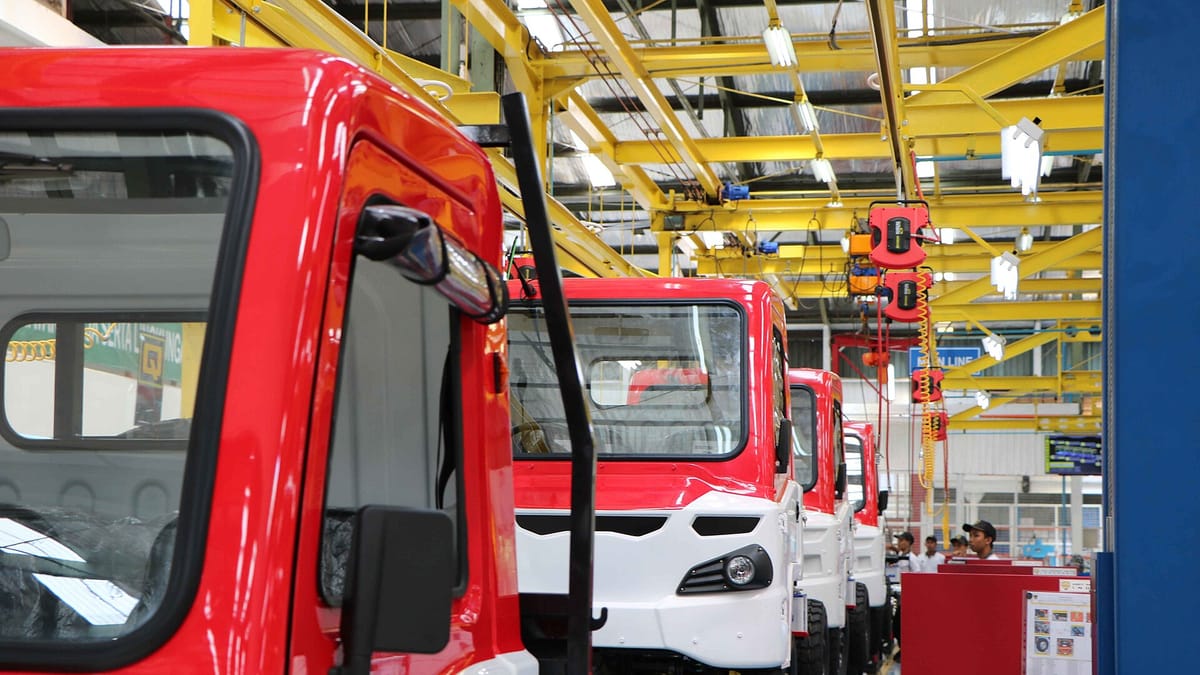
Indonesia is one of Asia's largest manufacturing economies. Its industrial estates stretch along the toll roads east of Jakarta through Bekasi, Cikarang and Karawang, continue across Central and East Java around Semarang, Surabaya, Gresik and Pasuruan, and extend to Batam, where factories sit an hour by ferry from Singapore. These plants make food and drink, garments and footwear, car and motorcycle parts, electronics, chemicals, packaging and much else, for the domestic market of more than 270 million people and for export.
Many of these factories still run their shop floor on paper, Excel and WhatsApp groups. Production reports are typed up after each shift, downtime is remembered rather than recorded, and the true output of yesterday's night shift is known only by mid-morning. A manufacturing execution system (MES) replaces that with live production tracking. This guide explains what an MES does, why it matters for factories in Indonesia, and how to start sensibly.
What an MES actually does
An MES sits between your planning or ERP system and the machines and people on the floor. ERP decides what should be made and when; the MES records what actually happened, minute by minute. A typical MES covers:
- Work orders and job tracking: which order is running on which line, how much has been made, and what is left.
- Production reporting: good output, rejects and rework entered at the line — or captured from machines — instead of on paper at the end of the shift.
- Downtime and OEE: every stop recorded with a reason, so availability, performance and quality can be measured honestly.
- Material consumption and traceability: which batches of raw material went into which finished goods.
- Quality checks: in-process inspections, checklists and non-conformances tied to the job that produced them.
- Dashboards: live screens for supervisors, plant managers and owners, on the shop-floor TV or a phone.
If you are new to the subject, our article What is an MES? covers the basics in more detail. The rest of this guide focuses on what is different when the factory is in Indonesia.
Why Indonesian factories are looking at MES now
Making Indonesia 4.0
The government's Making Indonesia 4.0 roadmap, launched in 2018, set out to raise productivity in priority sectors including food and beverage, textiles and clothing, automotive, electronics and chemicals. In practice, Industry 4.0 for a medium-sized plant starts with something less glamorous than robots: knowing, accurately and in real time, what each line is producing and why it stops. That is the core job of an MES, and most later steps — machine connectivity, predictive maintenance, energy monitoring — build on the data it collects.
Customers and parent companies want data, not reports
Many factories in Indonesia supply Japanese, Korean, Chinese, European or American brands, or are themselves subsidiaries of a foreign group. Those customers increasingly expect daily output figures, lot traceability and quality data on request, not a spreadsheet compiled once a month. A plant that can answer "which raw material lots went into shipment 4471?" in two minutes is easier to buy from.
Halal and product compliance
Indonesia's halal product assurance law has been phased in over several years. Under the government's timetable, certification became mandatory for food, beverages and many other product categories from October 2026, with some product groups, such as certain medicines, following later. Factories in these categories need clean evidence of approved materials and suppliers, segregation, and cleaning between runs. National standards (SNI) and export customers' own requirements add further records. None of this is new paperwork, but keeping it on paper means hunting through binders at audit time.
Labour costs and skills
Minimum wages differ by region and are notably higher in industrial districts such as Bekasi and Karawang than in many other parts of the country. That pushes owners to get more good output from the same headcount — which starts with seeing where time is lost. Supervisors also change often, so knowledge that lives in a supervisor's head leaves with them; an MES keeps it in the system.
Requirements that matter in Indonesia
Bahasa Indonesia on the shop floor
Operators should never have to work in a language they do not read comfortably. Every screen an operator touches — start job, record output, choose a downtime reason, complete a checklist — should be in Bahasa Indonesia, with large buttons and as little typing as possible. Managers and foreign head-office staff can see the same data in English. Downtime and defect reason lists should use the words people on the floor actually use, which usually means writing them together with your supervisors rather than translating a textbook list.
Multiple plants and warehouses
It is common for one company to run a main plant in Cikarang or Karawang, a second site in East or Central Java and a warehouse near Tanjung Priok port, or a plant in Batam serving export customers. A web-based MES can manage all of them in one system: each plant keeps its own lines, shifts, calendars and stock, and management sees combined figures. Access can be set so a plant supervisor sees only their own plant.
Shifts, overtime and holidays
Three-shift operation, Sunday overtime and a production calendar that changes around Lebaran, when many plants close or run reduced crews, must be built in. OEE and capacity figures are only fair if the system knows which hours were actually planned for production.
Connectivity in real factories
Internet inside a large steel building is often weaker than in the office. Shop-floor tablets or terminals should keep working through short outages and sync automatically. For plants in outer regions, a local server on site, syncing with the cloud, can be the better design.
Working alongside existing systems
Indonesian manufacturers use a wide mix of accounting and ERP systems — international ERPs at larger firms and local accounting packages at smaller ones. An MES does not need to replace them. Work orders can flow from ERP into the MES, and finished-goods output and material consumption can flow back, where your system provides an API, a database connection or even a scheduled file export. Where a link is not possible, the MES still delivers value on its own.
Records for halal, SNI and customer audits
For each batch or production order, the MES can hold the bill of materials actually used, the supplier lots consumed, the approved-supplier status at the time, line-clearance and cleaning checklists, and quality results. An auditor's question that used to take a day of searching becomes a filtered report.
A sensible first phase
The most common mistake is trying to do everything at once. A first phase that delivers value within a few months usually looks like this:
- Pick one plant and two or three lines, ideally a bottleneck line where lost time is expensive.
- Digital job cards: operators start and stop work orders on a tablet and record good output and rejects.
- Downtime with reasons: every stop longer than a few minutes gets a reason from a short list.
- A live dashboard on the shop-floor TV and on managers' phones.
- A daily production report that replaces the one typed up by hand.
Once people trust the numbers, add material traceability, quality checklists, machine signals and links to ERP. Our MES implementation roadmap walks through the stages in more detail.
Example: an auto-parts supplier in Karawang
Consider a typical tier-2 supplier of pressed and welded parts with 180 people on three shifts, supplying a car assembler and two tier-1 companies. Before the MES, each shift leader filled in a paper report; an admin typed it into Excel the next morning; and the plant manager learnt about a four-hour press breakdown the following day.
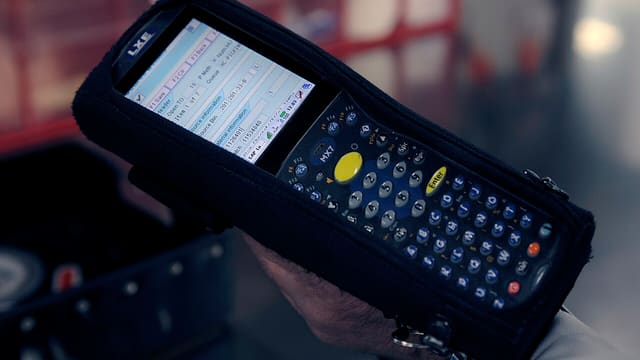
In the first phase, each press and welding cell got a rugged tablet. Operators scan the job card's QR code, tap "start", record output in batches and choose a downtime reason when the line stops. A screen above the main aisle shows each machine's status and today's output against plan. The maintenance team receives an alert when a press has been stopped for more than ten minutes for a breakdown reason.
Within the first two months the company typically learns things it had only suspected: that changeovers on two presses take twice as long as the standard, that the night shift loses time waiting for material, and that a single die causes most of the rework. None of these require new machines to fix — only visibility. The second phase adds heat-number and coil traceability, which the tier-1 customer had been asking for, and a link to the accounting system for finished-goods stock.
Machine data: when to connect equipment
Manual entry on a tablet is enough to start and works with any machine of any age. Connecting machines directly — reading cycle counts and running or stopped signals from PLCs or simple sensors — removes typing and improves accuracy, but it requires access to each machine and sometimes small hardware. A practical approach is to connect the bottleneck machines first, and keep manual entry for older equipment. Our page on machine monitoring software explains the options.
Off-the-shelf or custom MES?
Packaged MES products work well when your processes match their design and you have staff to configure them. Many Indonesian SMEs find they pay for modules they do not use, or have to change their processes to fit the software. A custom MES is built around how your plant actually runs — your job cards, your reason codes, your reports, your languages — and can start small and grow. Our guide on how to choose MES software compares the options honestly.
Questions to ask any MES supplier
- Can operators use it fully in Bahasa Indonesia, and can we edit the reason lists ourselves?
- What happens on the shop floor when the internet drops?
- How will it exchange data with our ERP or accounting software, and who maintains that link?
- Can it handle several plants with separate stock and calendars?
- What will the first phase deliver, how long will it take, and what does it cost in total?
- Who owns the software and the data at the end of the project?
- How is support provided after go-live, and during which hours?
Working with Corposol
Corposol builds custom MES, production tracking and factory software for manufacturers. We work remotely with clients outside India, using video workshops, short demo cycles and shared project tracking, and we can arrange time with your team on site when it is needed. Western Indonesia Time is only 90 minutes ahead of India, so our working days overlap almost entirely with yours. All custom code is transferred to you on final payment.
If your factory in Indonesia still runs production on paper and spreadsheets, a short conversation about one line and one report is a good place to begin.
Frequently asked questions
Can MES software be used in Bahasa Indonesia?
Yes. A custom MES can show every operator screen, label and report in Bahasa Indonesia, with English for management or a foreign parent company. Each user can choose their own language, while the data underneath stays the same.
Do we need to replace our ERP or accounting system to use an MES?
No. An MES manages what happens on the shop floor — work orders, materials, machines, quality checks and output. It can run alongside your existing ERP or accounting software, and data can be exchanged where that system offers an API or export.
Can an MES help with halal certification records?
It can keep the records an auditor typically asks for: which approved materials and suppliers went into each batch, cleaning and line-change records, and separation of halal and non-halal materials. The certification itself is granted by the authorities; software only makes the evidence easier to keep and find.
We have plants in Cikarang and Batam. Can one system cover both?
Yes. A web-based MES can run several plants in one system, with each plant's lines, shifts and stock kept separate and management seeing combined reports. Shop-floor screens can keep working through short internet outages and sync when the connection returns.
Does Corposol work with manufacturers in Indonesia?
Corposol builds custom manufacturing software and works with clients internationally through remote delivery, regular video demos and shared project tracking. Indonesia's western time zone (WIB) is only 90 minutes ahead of India, so working hours overlap almost completely.
How long does a first MES phase take?
It depends on scope, but a focused first phase — for example work orders, production reporting and downtime for one plant — is usually measured in weeks to a few months rather than years. We agree the scope and a fixed, itemised quote after a free consultation.