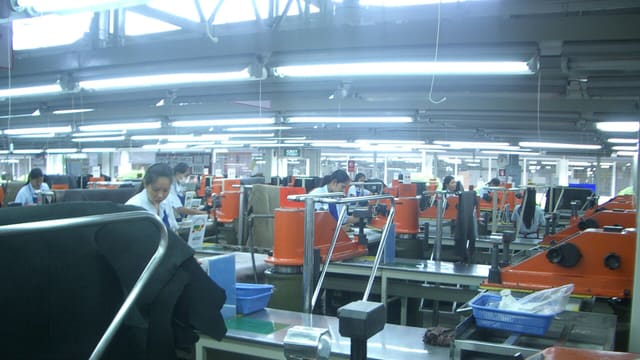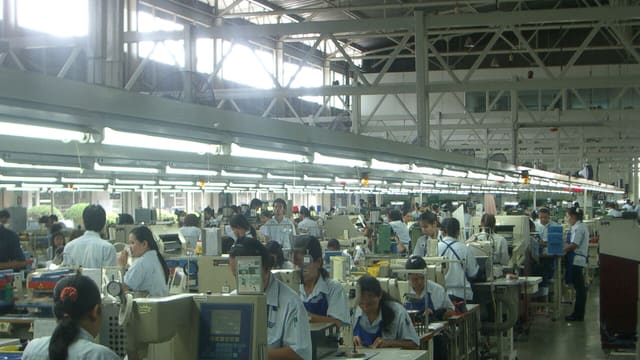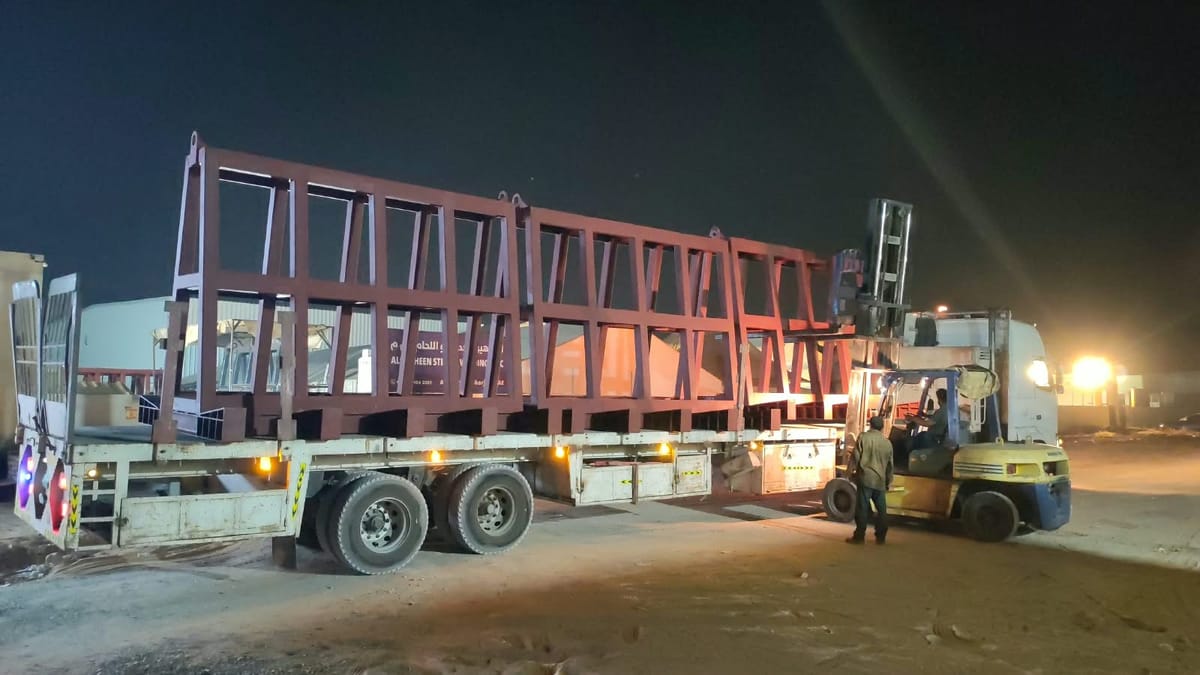
The UAE has made manufacturing a national priority. Operation 300bn, the industrial strategy launched in 2021, aims to raise the industrial sector's contribution to GDP from AED 133 billion to AED 300 billion by 2031. The Make it in the Emirates campaign promotes local production, and the In-Country Value (ICV) programme rewards suppliers that add value inside the country when bidding for government and major company contracts. Factories in KEZAD and ICAD in Abu Dhabi, JAFZA and Dubai Industrial City, Sharjah and the northern emirates produce metal fabrication, aluminium and glass products, building materials, food and beverages, packaging, plastics, furniture and joinery, chemicals and more.
Many of these plants are made-to-order businesses: each project or customer order has its own specifications, drawings and deadline. Their biggest daily problem is rarely machine speed — it is flow. Jobs get stuck between processes, urgent orders jump the queue and push others late, and nobody can say with confidence when an order will be ready. This guide explains how production flow management software addresses that, and what UAE manufacturers should look for.
What flow management means in a factory
Flow is the movement of work from raw material to dispatch. In a well-flowing factory, jobs move steadily from one process to the next with small, predictable queues. In a poorly flowing one, work piles up in front of some processes while others wait for work, lead times grow, and supervisors spend their day firefighting.
Production flow management software makes flow visible and manageable:
- Job routing: each order has a route — for example cutting, machining, welding, painting, assembly, inspection, packing — and the system knows which step each job is at.
- Live work-in-progress (WIP): how many jobs, pieces or hours of work are waiting at each process right now.
- Bottleneck view: which process has the largest queue relative to its capacity today.
- Priorities and dispatch lists: each workstation sees what to run next, ordered by due date and priority rather than by whoever shouts loudest.
- Delivery risk: which orders are likely to miss their dates, early enough to do something about it.
- Lead time and throughput reports: how long jobs actually take, and where the time is spent.
For background on the concepts, see our guides on WIP tracking and line balancing and takt time.
Why flow is hard in UAE factories
Project-driven demand
Construction, infrastructure, oil and gas, and hospitality projects drive much of UAE demand. Orders arrive in large, urgent bursts with changing drawings and site schedules. A fabrication shop or joinery may be running jobs for twenty projects at once, each with its own priorities and partial deliveries.
High mix, every order different
Aluminium and glass facades, steel structures, furniture and fit-out, signage, and custom packaging are all high-mix businesses where each order follows its own route and takes its own time at each process. Spreadsheets cannot keep up with that complexity once the order book grows.
Multinational, mobile workforce
Shop floors in the UAE bring together people from many countries, speaking many languages, with regular staff turnover. A system that depends on supervisors' memory breaks down when supervisors change; a system that records each job's status as it moves keeps working.
Customers want reliable dates
Main contractors and buyers want to know exactly when material will be ready, and late delivery to site can carry penalties. Being able to give accurate dates, and to warn early when a date is at risk, is a competitive advantage.
How the software works on the floor
- Order release: when an order is confirmed, it is broken into jobs with routes, drawings and quantities, and released to the floor with a printed or digital job card carrying a QR code.
- Scan in, scan out: at each process, the operator or supervisor scans the job card when work starts and finishes, recording quantities and any problems. This takes seconds.
- Live boards: screens on the floor and in the office show queues by process, jobs in progress, and orders at risk.
- Dispatch lists: each workstation sees its queue in priority order. Changes in priority are made once, in the system, and appear everywhere.
- Exceptions: jobs on hold for material, drawings or rework are flagged with a reason, so they are not forgotten.
- Delivery and dispatch: completed jobs are grouped into deliveries per project or customer, with packing lists and delivery notes.
No machine integration is needed to start; scanning job cards is enough. Machine data can be added later where useful.
Requirements that matter in the UAE
Languages and simplicity
Screens should be usable by people with limited reading in English, with options in Arabic and in languages common on the floor, such as Hindi, Urdu, Malayalam, Bengali or Tagalog. Large buttons, scanning and icons do most of the work.
Projects, not just orders
Many UAE manufacturers think in projects: a tower, a mall, a villa compound. The software should group jobs and deliveries by project, show progress per project and handle partial deliveries and revisions.
Drawings and revisions
Working to the latest drawing is critical in fabrication and joinery. Job cards should link to the current drawing revision, and revisions should notify everyone working on affected jobs.
ICV and costing data
Suppliers bidding for government and major company contracts often need an ICV certificate. The certificate is issued through the official programme, but its calculations rely on accurate data about local purchases, workforce and value added. Software that records material use, labour hours and production costs per order makes that data easier to assemble and defend.
Free zone and multi-site operations
Companies often run a plant in one emirate, a warehouse in another, or both mainland and free-zone entities. The system should handle several sites and entities, with appropriate separation and consolidated management reporting.
Example: an aluminium and glass fabricator
Consider a facade and aluminium fabricator with 150 workers in an industrial area, running jobs for fifteen building projects. Orders were tracked in a large spreadsheet maintained by the planning engineer; supervisors kept their own lists; and project managers phoned the factory several times a day to ask about progress.
The first phase introduced QR-coded job cards for each fabrication batch, scanning at cutting, machining, assembly, glazing, inspection and packing, and live boards showing queues and late jobs. Project managers got a read-only view showing the status of every item for their projects. The planning engineer stopped maintaining the spreadsheet.
Within the first months, the data showed that the real bottleneck was not machining, as everyone had assumed, but glazing, where jobs waited for glass deliveries. Changing how glass was ordered and scheduled shortened lead times more than an extra machine would have. Later phases added drawing revision control, labour hours per job for costing, and delivery planning by site.
Five numbers that tell you whether work is flowing
Flow management software produces many reports, but five numbers tell most of the story. Track them weekly and the effect of every change becomes visible:
| Measure | What it means |
|---|---|
| On-time delivery | The share of orders or deliveries completed by the promised date — the number customers care about. |
| Lead time | Calendar days from order release to dispatch, on average and for the slowest 10% of jobs. |
| Work-in-progress | How much work is released but not finished, in jobs, pieces or standard hours. |
| Throughput | How much work is finished per day or week, in the same unit as WIP. |
| Touch time ratio | The share of a job's lead time spent being worked on, rather than waiting. |
These numbers are connected. On average, lead time equals work-in-progress divided by throughput — a relationship known as Little's Law. If a fabrication shop finishes 40 standard hours of work a day and holds 800 hours of released work on the floor, jobs will take about 20 working days on average, no matter how hard people work. The fastest way to shorten lead times is usually not to work faster, but to release less work at once and keep it moving.
In many job shops the touch time ratio is surprisingly low — a job that takes three weeks may be worked on for only a day or two. The rest is queuing. Flow software shows exactly where those queues are, which is where improvement efforts should go.
Questions to ask any supplier
- How does the system handle jobs that each follow a different route?
- Can we group jobs by project and handle partial deliveries and revisions?
- How quickly can operators record progress, and in which languages?
- Can project managers or customers see progress without calling the factory?
- How will it support costing and ICV data?
- How does it connect to our ERP or accounting software?
- What does the first phase deliver, in what time and at what total cost?
- Who owns the code and data, and how is support provided?
Working with Corposol
Corposol builds custom production flow, MES and factory management software around how your factory and your projects actually run. We work remotely through workshops, short demo cycles and shared project tracking; the UAE's working day overlaps almost completely with India's, and on-site time can be arranged when needed. All custom code is transferred to you on final payment. If your orders are getting stuck between processes, we would be glad to talk about where flow is breaking down in your plant.
Frequently asked questions
What is production flow management software?
It is software that shows and controls how work moves through a factory: where each job is, how much work is waiting at each process, which jobs are late, and where the bottleneck is. It helps supervisors decide what to run next so orders are delivered on time.
Is flow management software the same as an MES?
It overlaps with an MES. Flow management focuses on job routing, queues, priorities and delivery dates; a full MES adds detailed traceability, quality and machine data. Many factories start with flow management and add MES features over time.
Does it work for job shops and made-to-order factories?
Yes — that is where it often helps most. In a job shop every order may follow a different route, so knowing where each job is and what is waiting at each machine is hard without software.
Can the system support In-Country Value (ICV) reporting?
It can provide accurate production, materials and costing data that feed into ICV calculations, such as local purchases and value added. The ICV certificate itself is issued through the official programme and certifying bodies.
Can our workforce use it if they speak different languages?
Yes. Screens can be offered in English, Arabic and other languages common on UAE shop floors, such as Hindi, Urdu or Malayalam, and rely mostly on scanning and simple taps.
Does Corposol work with manufacturers in the UAE?
Corposol builds custom production and factory software and works with clients internationally, including in the Middle East, through remote delivery, video demos and shared project tracking. The UAE is only 90 minutes behind India, so our working days overlap almost completely.