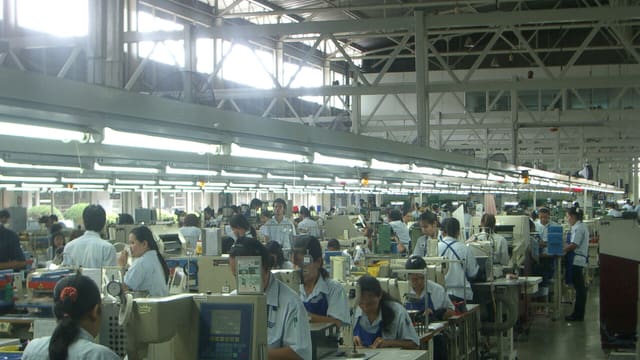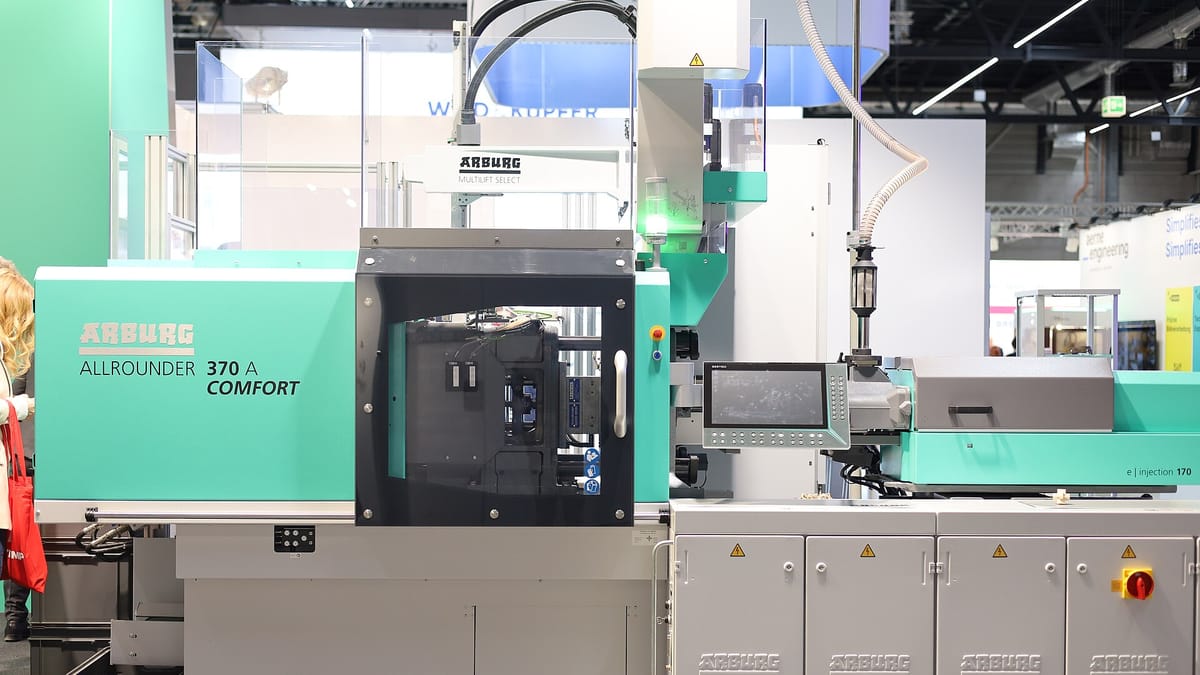
Malaysia has one of Southeast Asia's largest plastics industries. Industry figures reported in 2026 put it at around 1,400 manufacturers employing about 167,000 people, with total sales of about RM62.7 billion in 2025. Injection moulders make parts for electrical and electronics, automotive, medical devices, consumer products and packaging, many of them as suppliers to multinationals in Penang, Johor, Selangor and other states.
It is a tough business. Resin prices move with global markets, customers push for annual price reductions, and multinationals expect their suppliers to show traceability, process control and on-time delivery. Profit depends on running machines efficiently, controlling material and scrap, and keeping moulds in good condition. Those are exactly the things that are hard to see with whiteboards and production slips.
This guide explains what software injection moulding plants in Malaysia need, what to digitise first, and how to roll it out on the floor.
Where the money goes in a moulding plant
In most moulding plants, the main profit levers are:
- Machine utilisation — machines waiting for moulds, materials, setters or approval cost money every hour.
- Cycle time — a few seconds over the quoted cycle on a high-volume part erodes the margin on every shot.
- Scrap and rework — rejected parts, start-up scrap after changeovers and regrind that cannot be used.
- Material — resin and masterbatch usage against standard, drying losses and purging.
- Mould condition — moulds running with blocked cavities or waiting for repair reduce output.
- Changeovers — long mould changes and first-article approvals take capacity away from production.
Software does not fix these problems by itself, but it makes them visible every day, by machine, mould, part and shift, which is the first step to fixing them.
The core of moulding MES
Machine and job board
A live board shows every machine: running, stopped, in changeover, waiting for material or in maintenance; the job and mould on it; progress against quantity; actual versus standard cycle; and the time to complete. Planners and supervisors see at a glance which machines need attention, and management sees the whole plant without walking the floor.
Production and reject recording
Shots and good parts are recorded per job — automatically from machine signals where possible — and rejects are recorded with reason codes such as short shot, flash, sink, black spots, warpage or dimensional failure. Reject Pareto charts by part, mould and machine point to the real causes.
Downtime reasons
When a machine stops, the reason matters: mould problem, material, no operator, waiting for QC approval, machine breakdown, colour change. Capturing reasons with a simple screen at the machine, prompted by the stop signal, turns unexplained losses into a list of actions. See downtime management software.
OEE
Combining run time, cycle time and good parts gives OEE by machine, mould and part. The value is less in the single number than in the breakdown: is the loss in availability, speed or quality?
Mould management
Moulds are among a moulder's most valuable assets — and many of them belong to customers. A mould and tool management module typically covers:
- Mould register — ownership, part numbers, cavities, compatible machines, location and status.
- Shot counts — accumulated automatically from production.
- Preventive maintenance — triggered by shot count or time, with checklists and history.
- Repairs and modifications — what was done, by whom, cost and downtime, with engineering approvals where needed.
- Cavity blocking — which cavities are blocked and why, so planning uses the real cavity count.
- Customer-owned mould reports — shot counts and condition reports for customers who require them.
Material control: resin, masterbatch and regrind
Material is often the largest cost in a moulded part. Software helps control it by:
- Recording resin and masterbatch lots received, with supplier certificates.
- Issuing material to machines by lot, so finished parts can be traced to resin lots.
- Recording drying times and temperatures for hygroscopic materials, with alerts if material has not dried long enough.
- Comparing actual material use per job against the standard, including purging and start-up losses.
- Controlling regrind ratios where customers allow regrind.
Quality and traceability
Customers in electronics, automotive and medical devices expect suppliers to show what happened to a lot. A practical quality setup for moulders includes:
- First-article approval after each mould change, with the job blocked from full production until approved.
- In-process checks — visual and dimensional checks at set frequencies, recorded on tablets at the machine.
- Process parameter records — key settings recorded at the start of each job, and from the machine where it provides them.
- Lot labels on boxes or pallets, linking finished parts to the machine, mould, cavity where needed, material lot, shift and inspection results.
- Holds and non-conformance records, with containment by lot.
When a customer reports a problem, a backward trace shows how the lot was made; a forward trace shows which other lots and deliveries share the same material lot or mould condition.
A worked example: a short-shot problem on night shift
A moulder supplying housings to an electronics customer sees rejects for short shots rise on one machine during the night shift. Without software, the problem would show up in the next morning's reject report, after a full shift of scrap.
With MES, the reject rate on that job crosses its alert limit within an hour, and the supervisor receives a notification. The job screen shows the cycle time has crept up and the material record shows a new resin lot was loaded at the start of the shift; the drying record shows it went into the hopper before completing its drying time. The material is replaced with properly dried resin, the affected boxes are put on hold by lot, and the issue is recorded with a corrective action. Scrap is limited to an hour instead of a shift.
Planning and scheduling
Scheduling a moulding plant means matching jobs to machines with the right tonnage and shot size, moulds that are available and in good condition, materials that are in stock and dried, and setters available for changeovers. A planning module lets planners drag jobs onto machines, sees conflicts (mould already booked, material short) and updates delivery dates as production progresses. With live production data, the schedule reflects what is really happening, not yesterday's assumptions.
Costing
With real cycle times, scrap, material use and downtime recorded per job, the actual cost of each part can be compared with its quoted cost. That helps answer questions that matter in negotiations: which parts make money, which lose it, and what a customer's annual price-down request will really cost. See production costing software.
Costing data also improves quoting. When a new part is similar to parts already in production, the estimator can look up the real cycle times, scrap rates and changeover times achieved on comparable moulds and machines, instead of relying on optimistic assumptions. Quotes become more accurate, and the plant avoids winning business that turns out to lose money once production starts.
Connecting machines
Many modern moulding machines can share cycle signals and some can share process parameters through their controllers. Older machines can be connected with simple sensors that detect each cycle. The integration approach should be confirmed machine by machine; mixed fleets of different brands and ages are common, and the system should work with all of them. Starting with cycle signals for counting and stop detection gives most of the value; detailed parameter collection can follow for critical jobs.
What to digitise first
- Machine and job board with production and reject recording.
- Downtime reasons and basic OEE.
- Mould register, shot counts and maintenance.
- Material issue, drying and lot traceability.
- Quality checks, holds, planning and costing.
Secondary operations and assembly
Many moulders do more than moulding: pad printing, hot stamping, ultrasonic welding, insert assembly, painting or packing into customer-specific trays. These steps add value but also add complexity: work in progress between moulding and assembly, sub-components that must be matched, and extra quality checks. Software follows parts through these secondary operations the same way it follows them through moulding — with job records, quantities, rejects and lot labels — so that the traceability chain is not broken between the moulding hall and the assembly area, and so that WIP waiting between steps is visible.
Customer schedules and delivery performance
Moulders supplying multinationals usually receive rolling forecasts and firm call-offs, sometimes through customer portals, and are measured on delivery performance and quality. A sales order and schedule module can hold each customer's forecast and firm requirements, compare them with finished stock, WIP and planned production, and highlight risk early. When a customer pulls in a delivery, planners can see immediately whether the mould, machine and material are available to meet it. Delivery and quality scorecards prepared from the system's own data also help in quarterly business reviews with customers.
Energy and utilities
Electricity is a significant cost for moulders, especially those with older hydraulic machines, chillers and dryers. Where meters are available, energy use can be recorded by machine or area and compared with output. Simple insights — machines left heating during long stoppages, dryers running without demand, energy per kilo moulded by machine — often lead to quick savings and help prioritise investment in newer, more efficient machines.
Setters, technicians and skills
Good mould setters and process technicians are scarce, and much of their knowledge lives in their heads: the settings that work for a difficult mould, the trick for a stubborn changeover, the sign that a hot runner zone is about to fail. Software helps keep that knowledge in the plant. Approved process settings can be stored per mould and machine combination and shown at setup; changeover checklists guide less experienced setters; and the history of problems and fixes for each mould is available to whoever is on shift. Recording who performed each changeover, and how long it took, also shows where training would help most.
Multi-plant moulders
Several Malaysian moulding groups operate more than one plant, sometimes in different states or countries. One cloud system can give each plant its own machines, moulds and stock, while management compares utilisation, scrap and delivery performance across plants, and planners can see where a mould could be moved to balance capacity. Moulds transferred between plants carry their full shot count and maintenance history with them, instead of starting again on a new spreadsheet.
Questions to ask a software partner
- How will shot counts and stops be captured from each of our machines?
- How will moulds, cavities and customer-owned tooling be handled?
- Can screens be in Malay, English and Chinese?
- How quickly can we trace a lot back to material, mould and machine?
- What does each phase include, and how long will it take?
- Who owns the code and the data?
Working with Corposol
Corposol builds custom manufacturing software — MES, tool and mould management, quality, planning and costing — for manufacturers in Malaysia, Southeast Asia, India and beyond. We start with a focused first phase and grow the system with you. All custom code is transferred to you on final payment.
Frequently asked questions
What is MES for an injection moulding plant?
It is software that schedules jobs on moulding machines, records shots, good parts and rejects, tracks moulds and materials, captures downtime reasons and quality checks, and shows live machine status and job progress — replacing whiteboards, production slips and end-of-shift spreadsheets.
Can it get shot counts from our machines automatically?
Often, yes. Many moulding machines can provide cycle or shot signals and some can share process data. Older machines can usually be fitted with a simple sensor. We confirm the approach machine by machine during scoping.
Can it track mould life and maintenance?
Yes. Shot counts per mould are accumulated from production, and preventive maintenance is triggered by shots or time. Repairs, modifications and cavity blocking are recorded in the mould's history.
Can operators use it in Malay, Chinese or other languages?
Yes. Screens can be shown in Malay, English, Chinese and other languages, chosen per user, with the same data underneath.
Where should we start?
Usually with a machine status and job board, production and reject recording per job, and downtime reasons. Mould tracking, material control, quality and costing follow in later phases.