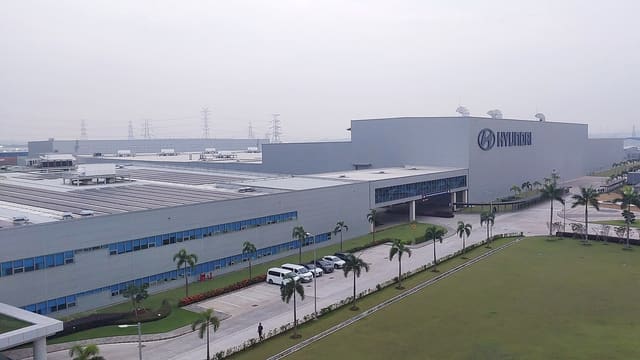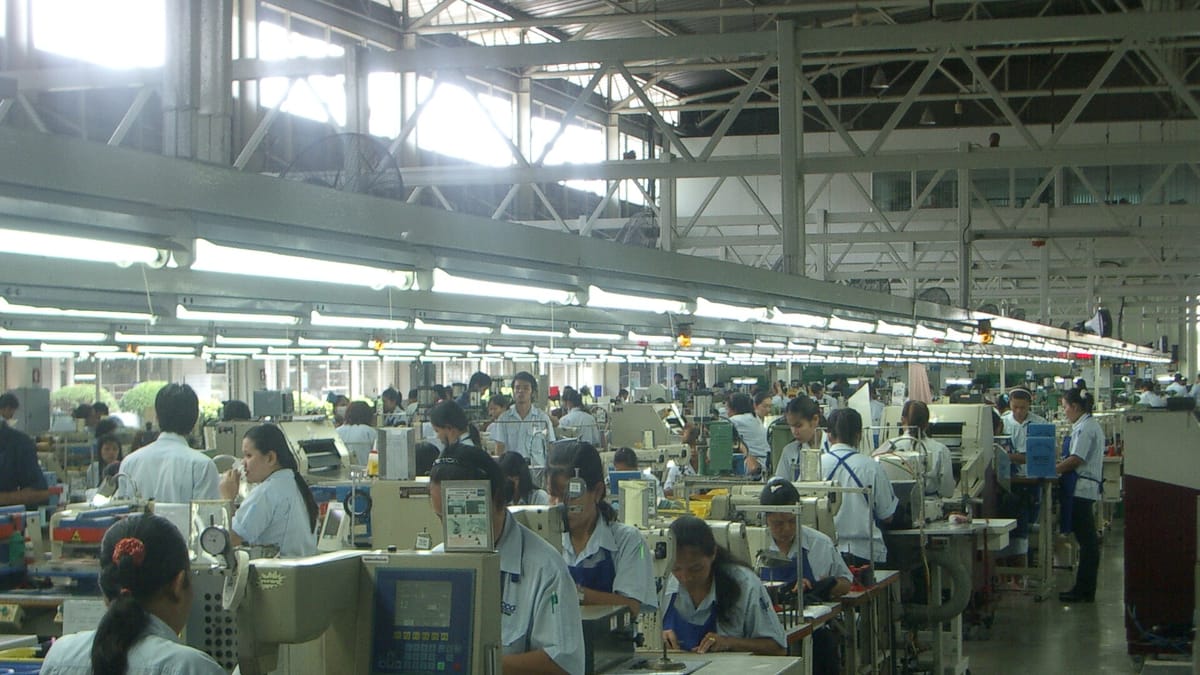
Thailand has long been one of Southeast Asia's most important electronics manufacturing bases — hard disk drive components, automotive electronics, appliances and electronic assemblies have been made in its industrial estates for decades. Since 2023 a new wave has arrived: printed circuit boards. Thailand's Board of Investment (BOI) reports that PCB projects were the single largest group among the high-technology investment applications it received from 2023 to mid-2026, and that Thailand has become ASEAN's leading PCB production base. Major new PCB plants have been starting operations from 2025 onwards, many of them by Chinese, Taiwanese and Japanese groups, alongside a supply chain of PCBA, component and material suppliers.
New plants, new supply chains and demanding global customers make software decisions urgent. A factory that starts with paper travellers and spreadsheets will find it hard to answer a customer's traceability question, explain a yield drop or plan a ramp-up across shifts. This guide explains what production software electronics and PCB factories in Thailand need, what to digitise first and how to roll it out without disrupting production.
Why electronics factories need more than an ERP
An ERP handles orders, purchasing, inventory value and accounts. It knows what should be built and what materials were bought. What it usually does not know is what actually happened on the floor: which lot ran on which machine, which reel of components went onto which board, which panels failed inspection, and why a line stopped for forty minutes after lunch.
In electronics, those details are exactly what customers ask about. When an automotive or industrial customer finds a failure in the field, they want to know which other boards share the same component lot, solder paste, reflow profile or test station. A manufacturing execution system (MES) keeps that record as work happens, so the answer takes minutes instead of days.
The processes software has to follow
Bare board (PCB) fabrication
PCB fabrication is a long process chain: inner-layer imaging and etching, lamination, drilling, plating, outer-layer imaging, solder mask, surface finish, routing, electrical test and final inspection. Panels move in lots, often splitting and merging as they go. Software needs to:
- Track each lot or panel through every step, with start and finish times and the machine used.
- Handle lot splits (for rework or holds) and merges without losing history.
- Record chemistry and process data that matter — bath analysis, plating parameters, lamination press cycles — against the lots processed.
- Capture inspection and electrical test results with defect codes, so yield losses can be traced to process steps.
- Show WIP by step, so planners can see bottlenecks and promise realistic delivery dates.
PCB assembly (PCBA) and box build
In SMT and assembly lines the focus shifts to components and boards. Software typically covers:
- Material verification at the feeder — scanning reels against the setup list before production starts and at every reel change, to prevent wrong-part placement.
- Component traceability — linking reel and lot numbers to the boards they went into.
- Moisture-sensitive device control — tracking open time and bake records for components that need it.
- Solder paste control — thaw time, open time and use-by limits per jar or cartridge.
- Inspection and test results — results from SPI, AOI, X-ray, ICT and functional test linked to each board serial number.
- Repair and rework records — what was repaired, by whom, and whether the board passed retest.
- Box build — parent–child links between boards, sub-assemblies and finished units.
What to digitise first
A complete MES for a large electronics plant is a big system. It does not need to be built in one go. For most factories, the first phase should be the one that removes the most risk and manual work. In practice that is usually:
- Lot and serial tracking by barcode. Labels on lots, panels or boards; a scan at each process step. This gives live WIP and the foundation for traceability.
- Defect and yield capture. Inspection results entered or imported with standard defect codes, so first-pass yield by step, product and line is visible every day.
- Material verification for SMT. Reel scanning against setups, which prevents expensive errors and builds component traceability as a by-product.
- A management dashboard. Output, WIP, yield and holds by line and shift, on one screen.
Later phases can add machine data collection, OEE, SPC on critical parameters, tool and stencil life, maintenance, and links to customer portals and the ERP.
A worked example: a yield drop on a new product
A PCBA line in an industrial estate in the Eastern Economic Corridor starts a new automotive control board. In the second week, AOI defects jump on the night shift. With paper records, engineers would spend the next morning collecting AOI printouts, line logs and setup sheets, and might not find the cause before the customer's next delivery.
With MES in place, the yield dashboard flags the drop during the shift. The defect Pareto shows insufficient solder on one component location. The paste record shows that the jar in use had passed its open-time limit after a long changeover, and the stencil record shows that cleaning frequency was reduced on that shift. The supervisor replaces the paste, restores the cleaning interval, and quarantines the boards produced in the affected window — which the system lists by serial number. The customer receives a short, factual report instead of a vague explanation.
Ramping up a new plant
Many of Thailand's new PCB and electronics plants are greenfield sites run by teams that combine engineers from the parent company with newly hired Thai staff. Software helps the ramp-up in practical ways:
- Standard work is built into screens. Operators see the right instructions, checks and limits for each product at each step, instead of relying on memory or paper binders.
- Training records are linked to permissions. The system can prevent an operator from signing off a step they have not been trained and certified for.
- Problems become visible early. Yield, scrap and downtime by step show where the process is not yet stable while volumes are still low.
- Knowledge stays in the plant. When expatriate engineers rotate out, the process history, defect records and corrective actions remain in the system.
Language, roles and multinational teams
Thai operators, Chinese or Taiwanese engineers, Japanese customers and English-language corporate reporting are common in the same plant. A custom system can show each user's screens in their own language while storing one set of data. Roles and permissions matter just as much: operators record work at their own stations, engineers change process limits under approval, quality releases holds, and management sees everything without being able to change records.
Connecting machines
Modern SMT placement machines, AOI systems, reflow ovens and testers often produce log files or provide data interfaces, and many PCB fabrication machines have controllers that record cycle data. Where a machine provides data, the MES can import counts, results and status automatically. Where it does not, simple sensors or operator scans fill the gap. The integration plan should be confirmed machine by machine during scoping; it is better to start with scanning and add connections where they bring clear value than to delay the whole project waiting for every interface.
Traceability: forward and backward
Electronics customers typically expect two kinds of answers:
- Backward traceability — given a board serial number, show the panel or lot, component reels and lots, solder paste, machines, programs, operators and test results.
- Forward traceability — given a suspect component lot or process event, list every board and shipment that could be affected.
Both depend on capturing the right links at the right moment: reel to feeder, feeder to board, board to panel, board to box, box to shipment. A traceability system designed around your actual process does this automatically as people scan, rather than asking them to fill in extra forms.
Quality management alongside MES
Production data is most useful when it feeds quality processes. A practical setup links:
- Non-conformance records to the lots and serial numbers involved.
- Holds and quarantines that block shipping until quality releases them.
- Corrective actions (CAPA and 8D reports) to the defect data that triggered them.
- Calibration status of gauges and test equipment, so out-of-calibration equipment is flagged before it is used.
- Customer complaints to the original production records.
See our quality management software page for how these fit together.
Build, buy or extend?
Large electronics groups sometimes bring a corporate MES from their headquarters. Smaller suppliers and new entrants often find that packaged electronics MES products are expensive, complex and built around another factory's process. A custom system can be the right choice when:
- Your process mix (for example, PCB fabrication plus assembly, or PCBA plus cable harness and box build) does not fit a standard product.
- You want to start small — one line or one process — and grow.
- Your customers have specific labelling, reporting or traceability requirements.
- You want to own the code and data, rather than depend on a licence model.
Where a corporate system already exists, custom software can still fill gaps around it: supplier and subcontractor tracking, maintenance, tool and stencil management, or a local management dashboard.
A phased rollout plan
- Scoping (a few weeks). Walk the process, collect labels, travellers, inspection sheets and reports, and agree the first phase.
- Phase 1. Labels and scanning, WIP and yield for one line or process area.
- Pilot and adjust. Run with real production, fix what slows people down, train supervisors to use the dashboards daily.
- Extend. Other lines and areas, material verification, holds and quality records.
- Connect. Machine data where it adds value, links to the ERP and to customer requirements.
Engineering changes and new product introduction
Electronics products change often: a new BOM revision, a substitute component, an updated test program or a stencil change. Each change has to reach the floor at the right moment — not before the customer approves it, and not after the old material runs out. Software helps by linking engineering change records to the products, BOMs, programs and documents they affect, and by giving each change an effective point (a date, a lot or a serial number). Operators see the right revision at their station; the traceability record shows which revision every board was built to. During new product introduction, the same system records pilot builds, first-article results and yield on the early lots, so the decision to release a product to volume production rests on data rather than impressions.
Dashboards that people actually use
A dashboard is useful only if it leads to action. For electronics plants the most-used views are usually simple:
- Line status — running, down or in changeover, with the current product and output against plan.
- First-pass yield by step — today against the last seven days, with the top defects.
- WIP ageing — lots that have waited too long at a step, which often signal a hidden bottleneck or a forgotten hold.
- Open holds — what is on hold, why, since when and who must decide.
- Delivery risk — customer orders where remaining WIP and yield make the promised date unlikely.
Daily production meetings that start from these screens tend to be shorter and more focused than meetings built around printed reports.
Questions to ask a software partner
- How will lot splits, merges, rework loops and holds be handled?
- Which of our machines can provide data, and how will that be confirmed?
- Can operator screens be in Thai, with other languages for engineers and management?
- How fast can the system answer a forward and backward trace?
- What does each phase include, and how long will it take?
- Who owns the code and the data?
Working with Corposol
Corposol builds custom manufacturing software — MES, traceability, quality and factory dashboards — for manufacturers in India, Southeast Asia and beyond, working remotely with on-site visits where needed. We start with a focused first phase and grow the system with you. All custom code is transferred to you on final payment.
Frequently asked questions
What is MES for a PCB or PCBA factory?
It is software that follows each panel, board or lot through every process step — for example lamination, drilling, plating, imaging, SMT placement, reflow, inspection and test — recording what happened, on which machine, with which materials and with what result. It gives live work-in-progress, yield and traceability instead of reports compiled after the shift.
Can the software show screens in Thai?
Yes. A custom system can show operator and supervisor screens in Thai, with English, Chinese or Japanese for engineers and management. Each user chooses a language; the data stays the same.
Do we need to connect every machine on day one?
No. Many factories start with barcode scanning at each step and add machine connections later, beginning with the bottleneck processes or those that already provide data files or signals.
Can it help us pass customer audits?
It keeps the traceability, inspection and process records that customers typically ask to see, and makes them quick to retrieve. Audit outcomes depend on how the factory operates; the software makes the evidence easier to keep and find but cannot guarantee a result.
We are a new plant still ramping up. Is it too early?
It is usually the best time. Building the processes, labels and records into software from the start is easier than replacing paper and spreadsheets once volumes are high.