Every factory produces scrap: turnings and chips from machining, skeletons and blanks from pressing, sprues and runners from moulding, bar ends, sheet remnants, rejected parts, packing waste. In many Indian SMEs, scrap is treated as an afterthought — swept into a corner, sold to the same dealer every few weeks, and recorded only when the dealer's payment arrives. Yet scrap is material the factory paid for, often a substantial share of material cost, and it holds three kinds of information: how efficiently material is used, where losses hide, and whether the scrap sold matches what was produced.
This guide explains how to manage scrap and offcuts as material with value — recording, segregating, reusing and selling — and how inventory software supports it. For reducing scrap through better quality, see our companion guide on reducing scrap and rework.
Types of scrap
- Process scrap — material removed or left over by the process itself: chips, turnings, press skeletons, trim, sprues, runners. Expected and largely predictable from the part design.
- Setup scrap — parts or material wasted while setting up a job.
- Rejection scrap — finished or partly finished parts rejected for quality.
- Remnants and offcuts — leftover material that may be reusable.
- Non-production waste — packing material, pallets, drums, consumables.
Each type has a different cause and a different fix. Process scrap is reduced by design and nesting; setup scrap by better setups; rejection scrap by quality improvement; remnant waste by reuse. Lumping them together hides all of these opportunities.
Yield: the number that matters
Yield is the share of input material that ends up in good parts. For a turned part made from bar, it is the finished part's weight divided by the bar weight consumed per part. For pressed parts, it is the blank or part weight divided by the strip or sheet consumed. Knowing yield by part and material lets you:
- Check that BOM material allowances are realistic.
- Spot parts where yield drops — a sign of more rejections, setup waste or poor nesting.
- Quote new parts with real material consumption rather than theoretical weights.
- Compare suppliers' material sizes — a bar diameter closer to the finished size may cost more per kilogram but less per part.
Recording scrap at the source
Scrap should be recorded where and when it is generated, by type and weight:
- Process scrap — collected in labelled bins at each machine or section, weighed at the end of the shift or when the bin is full, and recorded against the section (and against work orders where practical).
- Rejected parts — recorded at inspection with the rejection reason, then weighed and moved to scrap.
- Setup scrap — recorded by the operator with the job.
A platform scale near the scrap yard and a phone screen to record type, weight and source are enough. The scrap yard becomes a store with its own stock by scrap type, just like raw materials.
Segregation pays
Scrap dealers pay very different rates for different materials and grades, and much less for mixed scrap. Stainless steel mixed with mild steel, brass with copper, or oily turnings with clean ones all lose value. Segregation is cheap at the machine — separate, clearly marked bins — and expensive later. Recording scrap by type also makes segregation discipline visible: if the factory processes stainless steel but sells no stainless scrap, it is going somewhere else.
Offcuts and remnants: reuse before buying
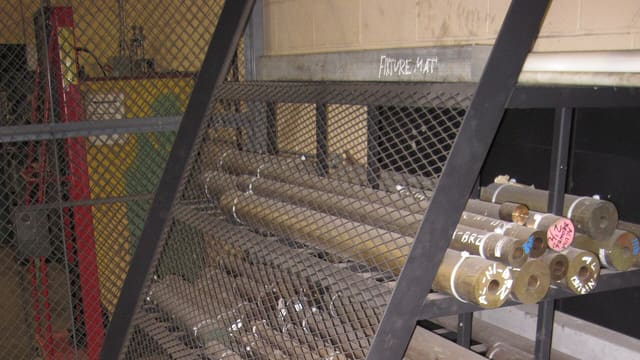
A remnant of plate, sheet or bar large enough to make another part is not scrap; it is stock. Too often remnants lean against a wall, unrecorded, while new material is cut for small parts. Managing remnants well means:
- Setting a minimum size for each material above which leftovers are kept — for example a bar end longer than a certain length, or a sheet remnant above a certain area.
- Recording each remnant as a stock item with material, grade, thickness or diameter, dimensions, weight and heat number where traceability matters.
- Labelling and racking remnants with a location.
- Checking remnants first when material is issued for small jobs — the issue screen shows suitable remnants before new stock.
- Clearing old remnants to scrap after a period if they haven't been used.
Nesting and cutting-optimisation software can use remnant records directly where it supports them; even without that, a searchable remnant list changes behaviour on the floor.
Customer-supplied material and job work
When you process customer-supplied material, its scrap often belongs to the customer or must be accounted for in reconciliation statements. The same applies to material sent to job-work vendors, whose process loss must be within agreed limits. Recording scrap against the customer's or vendor's material, by work order and challan, makes these reconciliations straightforward. Our guide to job-work challans and balances covers the documentation.
Selling scrap
Scrap sales are a real revenue stream and a classic area for leakage. Good practice:
- Scrap leaves only against a sale document with type, weight and rate, generated from the scrap stock.
- Weighing at dispatch on your own scale, with the vehicle number recorded, and the dealer's weighbridge slip attached.
- Rates compared across dealers periodically and linked to published market rates where they exist.
- Scrap sold reconciled with scrap generated, by type, every month.
- GST invoices for scrap sales raised like any other sale.
Reconciliation
A monthly scrap reconciliation compares, for each scrap type: opening stock plus scrap recorded, minus scrap sold, against closing stock counted in the yard. A second check compares scrap generated with what the material balance predicts — material issued, minus good output, minus returns and remnants. Differences in either check point to unrecorded scrap, wrong weights, scrap leaving without a sale, or losses that aren't scrap at all.
What software should do
- Scrap types as stock items, with stock by type in the scrap yard.
- Recording of scrap by source (section, machine, work order) with weight from a phone.
- Rejected parts moved to scrap from inspection records.
- Remnants as reusable stock with dimensions, suggested at material issue.
- Scrap sales with weighing details and invoices.
- Yield by part and material, and monthly reconciliation reports.
Scrap from customer rejections and returns
Parts returned by customers as rejected are often scrapped eventually, but they first need to be received, inspected and recorded against the complaint. Recording them as scrap only after disposition keeps the complaint, the cost and the scrap weight connected. It also stops returned parts from being mixed with good stock or quietly reworked without a record. The cost of these parts — material, processing and freight — belongs in the cost of poor quality for that customer and defect.
Scrap targets by part
Once scrap and yield are recorded by part, sensible targets follow. Process scrap for a part is largely fixed by its design and material size, so its target is the theoretical figure plus a small allowance. Setup and rejection scrap vary with practice and are where targets drive improvement. A monthly review of parts whose total scrap exceeds the target, with the main type of scrap for each, gives the production and quality teams a short, focused list rather than a general instruction to "reduce scrap".
Environmental and disposal records
Some waste — used oils, coolants, paint sludge, chemical containers — is not sold as scrap but must be disposed of through authorised channels, with records kept. Including these waste types in the same system, with quantities generated, stored and handed over and the disposal documents attached, keeps the records in one place. Specific obligations depend on your industry and location, so confirm them with your advisers; the software's role is to make recording easy and retrieval quick.
Who owns scrap
Scrap often falls between departments: production generates it, stores may or may not handle it, accounts records the sale and the owner negotiates with the dealer. Give one person clear responsibility for the scrap yard — usually stores — with authority to refuse unrecorded scrap and to release sales only against recorded stock. Without an owner, the best system soon decays into the old corner pile.
Using scrap data in quotations
Material is often the largest part of a quoted price, and the difference between theoretical and actual consumption can decide whether a part makes money. When yield is known for similar parts, new quotations can use realistic material consumption, and the scrap credit — the value of scrap sold per part — can be included where the customer's pricing allows. For high-value materials such as brass, copper and stainless steel, this credit is significant and is sometimes negotiated explicitly with customers.
Measures to review monthly
- Yield by material and for the top parts by material value.
- Scrap generated by type and source, against target.
- Remnants reused versus remnants scrapped.
- Scrap sold by type, with average rate achieved.
- Reconciliation difference between scrap generated and scrap sold.
Five numbers on one page, reviewed by production, stores and accounts together, keep scrap on the agenda without turning it into a project.
A worked example
A turned-parts manufacturer machining brass, stainless steel and free-cutting steel sold its scrap to two dealers every fortnight, recorded only in accounts. Brass is expensive, and the owner suspected the scrap revenue was lower than it should be.
The company introduced segregated, labelled bins at each machine, weighed scrap by type at each shift end and recorded it on a phone, and made the scrap yard a store with stock by type. Sales could only be made from recorded stock. The first monthly reconciliation showed brass scrap sold was well below brass scrap generated. The cause turned out to be mixed bins — brass turnings collected with steel and sold at the steel rate. Segregation was enforced, and brass scrap revenue rose. Yield reports also showed two parts whose bar diameter could be reduced, saving material on every part.
Scrap in the costing
Job and product costs should include material at gross consumption — including process scrap, setup waste and rejections — minus the value recovered from scrap sales. When scrap is unrecorded, costing either assumes theoretical consumption, which flatters margins, or adds a blanket allowance that hides which parts waste the most. With scrap recorded by part, each part carries its own true material cost, and the parts where material efficiency matters most stand out immediately. This is often where the first significant savings from scrap management come from: not from selling scrap better, but from generating less of it on the few parts that matter most.
Getting started
- Define scrap types by material and grade, and put labelled bins at the source.
- Weigh and record scrap by type and section at each shift end.
- Make the scrap yard a store; allow sales only from recorded stock.
- Set minimum remnant sizes and record reusable remnants.
- Reconcile monthly and review yield by part.
Working with Corposol
Corposol builds custom inventory software for Indian manufacturers, covering raw materials, remnants, scrap, job work and yield, as part of our manufacturing software work. All custom code is transferred to you on final payment.
Frequently asked questions
Why record scrap if it is sold anyway?
Because scrap is material you paid for. Recording it shows yield by part, material and process, reveals losses that aren't scrap at all, and ensures that the scrap sold matches the scrap generated.
What is the difference between scrap and an offcut?
An offcut or remnant is leftover material large enough to be used for another part — a sheet remnant, a bar end above a minimum length. Scrap is too small or unsuitable to reuse and is sold or disposed of.
How should scrap be segregated?
By material and grade, at the point of generation: stainless separate from mild steel, copper from aluminium, clean turnings from oily ones. Mixed scrap sells for less, and segregation is far easier at the machine than later.
How do we reconcile scrap sales?
Compare scrap weight generated and recorded with scrap weight sold over the same period, by type. Large differences point to unrecorded scrap, recording errors or scrap leaving without a sale.