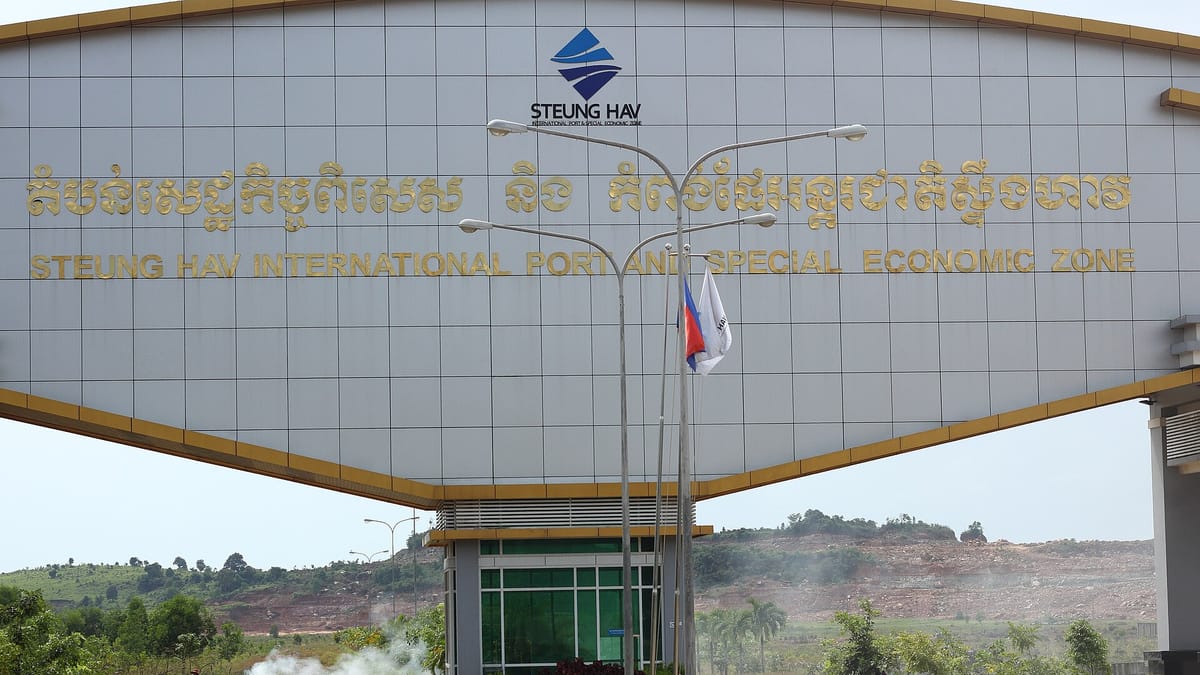
Garments, footwear and travel goods are the backbone of Cambodia's export economy. In 2025 the sector's exports reached about US$15.5 billion, roughly half of the country's total exports, and Better Work reports more than 1.1 million workers in about 1,800 firms, most of them women. Factories are spread around Phnom Penh, along the main roads to Kampong Speu, Kandal and Takeo, and in special economic zones from Bavet on the Vietnamese border to Sihanoukville on the coast.
Most of these factories produce to tight buyer deadlines, on thin margins, with large workforces and many styles running at once. Yet a surprising share still track production with hourly boards, paper bundle tickets and spreadsheets typed up after each shift. Production tracking software — sometimes called an apparel MES — changes that. This guide explains what it does, where it pays off in a Cambodian garment or footwear factory, and how to roll it out without disrupting the lines.
Why visibility matters more every season
Cambodian factories face pressure from several directions at once. Buyers expect shorter lead times, smaller orders and more styles. Since the European Union partially withdrew Cambodia's "Everything But Arms" trade preferences in 2020, some products pay duties that eat into margins. Competition from Vietnam, Bangladesh and Myanmar is intense. And buyers' compliance teams want evidence on working hours, quality and traceability that is hard to produce from paper.
In that environment, the factories that do well are those that know — during the shift, not the next morning — which lines are behind, which operations are bottlenecks, which styles are generating defects and whether each order will ship on time.
What production tracking software does
Live output by line and hour
The basic function is simple: count good pieces by line, hour and operation as they are produced. Most factories do this with barcode or QR bundle tickets. When cutting finishes a bundle, a ticket is printed with the order, style, colour, size, bundle number and quantity. As the bundle passes key operations, a scan records it. The result is a live board showing each line's target, actual output and efficiency, hour by hour.
Work in progress and bundle tracking
Bundle scanning also shows where every bundle is: in cutting, waiting for a line, in sewing, in finishing, or lost. Large WIP buffers hide problems and tie up cash; seeing WIP by line and stage helps planners keep it under control and find missing bundles before they delay a shipment.
Line balancing and efficiency
With standard minute values (SMV) for each operation and actual output by operator or operation, supervisors can see which operations are bottlenecks and move operators accordingly. Efficiency by line, style and operator becomes a fact rather than an estimate.
In-line and end-of-line quality
Quality inspectors record defects on a tablet by operation and defect type — open seam, broken stitch, uneven hem, stain, measurement out of tolerance. Defects per hundred units (DHU) by line and style appear in real time, so a problem at one operation can be corrected in the next hour, not discovered at final audit.
Order and shipment tracking
Management and merchandisers see each purchase order's progress from cutting to packing against its ex-factory date. Orders at risk are flagged early enough to add overtime, rebalance lines or talk to the buyer.
The cutting room: where accuracy starts
Everything downstream depends on the cutting room. If bundle quantities are wrong, every later count is wrong too. Cutting-room software typically records:
- Fabric receipt by roll — supplier, lot, shade, width and length, with a label on each roll.
- Fabric inspection results — defects per roll and shade grouping, so mixed shades don't end up in the same garment.
- Lay and marker details — which rolls went into which lay, marker length and planned versus actual fabric use.
- Cut quantities by size and colour — the basis for bundle tickets and for cut-to-ship reconciliation.
With this in place, fabric consumption per garment becomes visible by style and order. Since fabric is usually the largest single cost in a garment, even modest improvements in marker efficiency and end-loss control matter. Roll-level records also link finished garments back to fabric lots when a buyer raises a shade or quality complaint.
A tracked line, hour by hour
To see how this works in practice, follow one sewing line through a morning. At 7:00 the line leader opens the day's plan on the line terminal: style, target per hour based on SMV and manpower, and the bundles waiting in the input rack. As bundles are loaded, the input scan records them. Each hour, output scans at the end of the line update the TV board: target 120, actual 104, efficiency 81%. By 9:00 the board shows output falling behind and the in-line inspector's tablet shows a cluster of broken-stitch defects at one operation. The supervisor checks the machine, finds a needle and tension problem, and moves an experienced operator to support the operation while it is fixed. By 11:00 the line is back on target.
Nothing in that story is new to a good supervisor. What is new is that it happened in two hours instead of being discovered in the next morning's report, when the shipment date was already at risk.
Planning and style changeovers
Frequent style changes are one of the biggest drains on efficiency. When production data is reliable, planners can see the real learning curve for each line after a changeover, plan realistic targets for the first days of a new style, and group similar styles on the same lines. Over time, the factory builds its own history of how long each type of style really takes, which improves both planning and costing for new orders.
Footwear and travel goods
Footwear and bag factories follow the same principles with different stages. A footwear flow typically covers cutting, stitching of uppers, lasting, sole attaching, finishing and packing, with size runs and pairing to manage. Travel goods add hardware, lining and assembly steps. A custom system models your actual stages instead of forcing an apparel template onto shoe or bag production.
Buyer compliance and audits
Many Cambodian factories work with international brands and with programmes such as Better Factories Cambodia. Audits and buyer visits typically ask for evidence on working hours, overtime, quality, and the origin and handling of materials. Production tracking software can help by keeping:
- Hourly output linked to actual working time on each line.
- Quality inspection records by order, line and operation.
- Material lots used for each order, from fabric roll to finished carton.
- Packing lists and carton contents generated from scanned data.
Software makes this evidence quicker to produce and harder to dispute. It does not replace good practice on the floor, and it cannot guarantee any audit outcome.
Designing for the factory floor
Garment and footwear factories have large workforces, high turnover and fast-moving lines. Shop-floor software must be designed accordingly:
- Khmer-language screens for operators and supervisors, with English or Chinese for management and buyers.
- Scanning instead of typing. A scan takes a second; typing a style number takes much longer and introduces errors.
- Large, simple screens on rugged tablets or line-end terminals.
- Offline tolerance so scans are kept during network interruptions and sent when the connection returns.
- TV boards per line showing target, actual and efficiency, which often improve performance by themselves simply by making progress visible.
What to digitise first
- Hourly output by line with a live board. This alone replaces the hourly whiteboard and gives management a real-time view.
- Bundle tickets and scanning at cutting output, sewing input, sewing output and finishing — the points where WIP builds up.
- In-line quality with DHU by line and operation.
- Order tracking against ex-factory dates.
- Operation-level tracking and line balancing once the basics are trusted.
- Integration with the ERP or payroll system where they allow it.
Piece-rate and incentive data
Many factories pay production incentives or piece rates. When output is scanned at operation level, the data needed to calculate incentives already exists. Linking the two removes a large amount of manual counting and reduces disputes, because operators can see their own counts. The rules themselves stay under the factory's control, and payroll calculations should always be checked by the people responsible for them.
What the management dashboard should show
For owners and general managers, a single screen should answer the questions they ask every morning: which lines are behind target today, which orders are at risk of missing their ex-factory date, where WIP is building up, which styles and lines have the highest defect rates, and how much overtime is being used. For groups with more than one factory, the same view should compare plants side by side. If management can see this on a phone without calling anyone, the system is doing its job.
Measuring the benefit
Before go-live, measure a few numbers on a pilot line so you can compare later: hourly output against target, efficiency, WIP between cutting and sewing, DHU and on-time shipment rate. Then watch how they change as supervisors start acting on live data. Gains come from what the team does with the information, so be wary of anyone promising a fixed percentage before seeing your factory.
Common mistakes
- Too many scan points at the start. Start with four or five critical points, then add more.
- Boards nobody looks at. Build a daily routine — line meetings at the board — or the screens become decoration.
- Ignoring the cutting room. Accurate bundle tickets start with accurate cutting records.
- No owner in the factory. Someone must own the data, the reason codes and the routines.
Questions to ask a supplier
- Can operators and supervisors use the system entirely in Khmer?
- How do bundle tickets work for our cutting process, and what printers and scanners are needed?
- What happens when the network goes down?
- Can it handle our styles, size runs and, for footwear, pairing?
- How will it connect to our ERP, payroll or buyer portals?
- What does the first phase include, how long will it take and what is the total cost?
- Who owns the code and the data?
Working with Corposol
Corposol builds custom production tracking, MES and quality software for manufacturers, including multi-plant systems with desktop and mobile apps — see our use case for a manufacturer with 11 factories. We start with one line, prove the value and extend from there. We work remotely, with a working day that overlaps Cambodia's almost entirely, and all custom code is transferred to you on final payment.
Frequently asked questions
What is production tracking software for a garment factory?
It records output by line, operation and hour — usually through bundle tickets or barcode scans at each workstation — and shows live efficiency, work in progress, quality defects and order progress. It replaces hourly boards filled in by hand and the end-of-day spreadsheets built from them.
Can the software work in Khmer?
Yes. A custom system can show operator and supervisor screens in Khmer, with English or Chinese for management and buyers. Each user can choose their language while the data stays the same.
Do we need to tag every bundle?
Bundle tickets with barcodes or QR codes are the most common method, because they track pieces through cutting, sewing and finishing without extra effort from operators. Some factories start with line-level hourly entry on a tablet and move to bundle scanning later.
Can it help with buyer audits and compliance?
It can keep the production, quality and working-hours records auditors usually ask for and produce them quickly. Compliance itself depends on how the factory operates; software makes the evidence easier to keep and find, but it does not guarantee an audit result.
We are a footwear factory, not apparel. Does this apply?
Yes, with different stages. Footwear tracking typically follows cutting, stitching (upper), lasting, sole attaching and finishing, with size runs and left/right pairing. The principles of live output, WIP and defect tracking are the same.
Does Corposol work with factories in Cambodia?
Corposol builds custom manufacturing software and works with clients internationally through remote workshops, video demos and shared project tracking. Cambodia is 90 minutes ahead of India, so working hours overlap almost completely. All custom code is transferred to the client on final payment.