Electrical equipment manufacturers — makers of switchgear, control and distribution panels, transformers, motors, cables and wiring accessories — share a few characteristics. Many products are configured to order. Material costs depend heavily on copper, aluminium and steel prices. Every unit is tested before dispatch, and customers expect test certificates. And large orders often run as projects with drawing approvals and staged deliveries.
Configured products
A panel or transformer order is defined by ratings and options: current and voltage ratings, short-circuit rating, enclosure type, component makes, metering, protection and accessories. Configuration rules can generate the BOM, wiring references and cost estimate from these options, instead of an engineer building each one from scratch. Standard configurations become reusable templates.
Metal-linked costing and quotations
Copper and aluminium prices can move significantly between quotation and order. Quotation software that calculates material cost from current metal prices — and can show the impact of a price change on open quotes — protects margins. Many manufacturers also agree price-variation clauses; recording the base metal price in each quote supports those calculations. See quotation software.
Drawing approvals
For project orders, general arrangement drawings, single-line diagrams and BOMs are submitted to the customer or consultant for approval. Tracking submissions, comments, revisions and approval dates per order — and releasing production only after approval — prevents costly rework.
Production stages
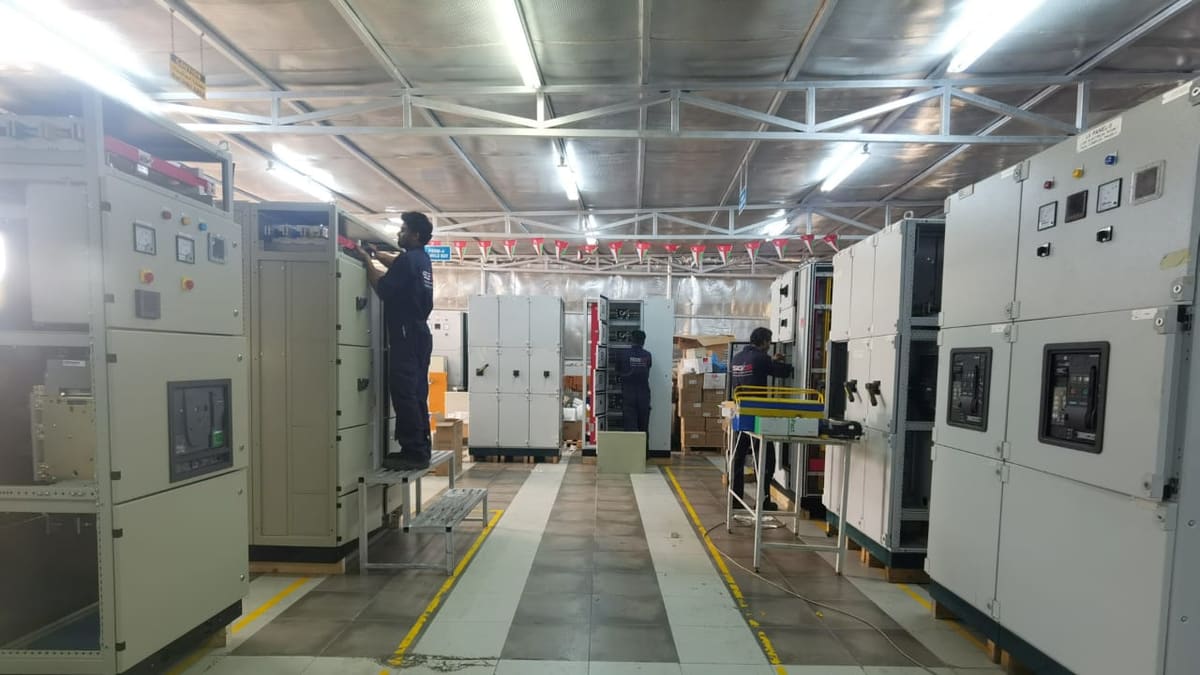
Panels move through sheet metal fabrication, powder coating, busbar fabrication, component mounting, wiring, testing and packing. Transformers through core building, winding, assembly, drying, tanking, oil filling and testing. Cables through wire drawing, stranding, insulation, sheathing, armouring and testing. Each stage can be booked on tablets, giving live status per order and serial or drum.
Routine testing and test certificates
Routine tests — insulation resistance, high-voltage withstand, ratio, resistance, losses, functional checks — are performed on every unit. Recording readings on a tablet or importing them from test equipment where it supports export, with automatic pass/fail against limits, creates a test record per serial number. Test certificates are generated in your format directly from the data, eliminating retyping and transcription errors.
Component and material control
Breakers, relays, meters and other bought-out components are often specified by make. Kitting by order, with serial numbers recorded for key components, supports warranty claims and traceability. Copper and aluminium issued against orders is reconciled with consumption and scrap.
Project-wise order tracking
Large orders — a substation's panels, a factory's motor control centres — are tracked by project with multiple units, staged deliveries, inspections by customer or third parties, and documentation. Project managers see the status of each unit and what's pending for dispatch.
Customer and third-party inspections
Many electrical orders require inspection before dispatch. Scheduling inspections, recording results and punch points, and tracking closure keeps dispatch on time.
After-sales and warranty
Each unit shipped, with serial number, test record and component details, becomes part of the installed base. Warranty claims and service calls are linked to the original records.
Common problems this software solves
- Engineers spending hours building BOMs for similar configurations.
- Quotes outdated by metal price changes.
- Test certificates typed manually, with errors.
- Production started before drawing approval, causing rework.
- No consolidated view of large project orders.
KPIs to track
- Quote turnaround and win rate.
- Material cost variance versus quote.
- First-time test pass rate.
- On-time delivery by project.
- Warranty claims per hundred units.
Where to start
- Configuration rules and metal-linked quotations.
- Order and drawing approval tracking.
- Stage booking and test records with certificates.
- Project dashboards and after-sales records.
Corposol builds electrical manufacturing software. Talk to us.
Panel builders: wiring and component mounting
For control and distribution panel builders, the wiring stage consumes the most labour and causes most rework. Digital wiring checklists by panel section, with photos at key stages, help supervisors confirm quality before testing. Recording which wireman worked on which panel, and the rework found at testing, shows where training or clearer drawings would help. Component mounting can be checked against the BOM by scanning component barcodes, catching wrong makes or ratings before wiring begins.
Ferrule and label printing can be driven from the wiring schedule, so ferrules match drawings exactly — a common source of commissioning confusion when done by hand.
Transformer manufacturers: winding and drying records
Transformer quality depends on winding accuracy, insulation and drying. Recording conductor details, turns, winding dimensions, drying cycle parameters and oil test results per unit creates a complete manufacturing record that supports test certificates, customer inspections and warranty investigations. Comparing loss test results with design values across units helps designers refine future designs.
Cable manufacturers: drum-wise tracking
Cable production is tracked by drum: conductor size and material, insulation and sheath compounds, lengths produced at each stage, scrap and test results. A drum label with all key data, linked to the order and dispatch, makes customer queries and warranty claims easy to answer. Compound consumption per kilometre is a key cost metric that becomes visible with stage-wise booking.
Warranty and failure analysis
When a unit fails in the field, the serial number opens its complete record: components and their serials, wiring or winding details, test readings and inspections. Patterns across failures — a component batch, a winding machine, a supplier — become visible, guiding corrective action.
Frequently asked questions
Can BOMs be generated from ratings and options?
Yes. Configuration rules turn ratings and options — current, voltage, enclosure, components — into a BOM and drawing references for each order.
Can test certificates be printed per serial number?
Yes. Test readings entered on a tablet or imported from test equipment populate your certificate format for every unit.
Can quotes update when copper prices change?
Yes. Metal-linked costing recalculates material cost from current copper, aluminium and steel rates.
Can we track drawing approvals from customers?
Yes — drawing submission, comments, revisions and approval dates per order, with production released only after approval.
Is the software suitable for cable manufacturers?
Yes. Drum-wise production, lengths, conductor and insulation details and test results can be tracked per drum.