
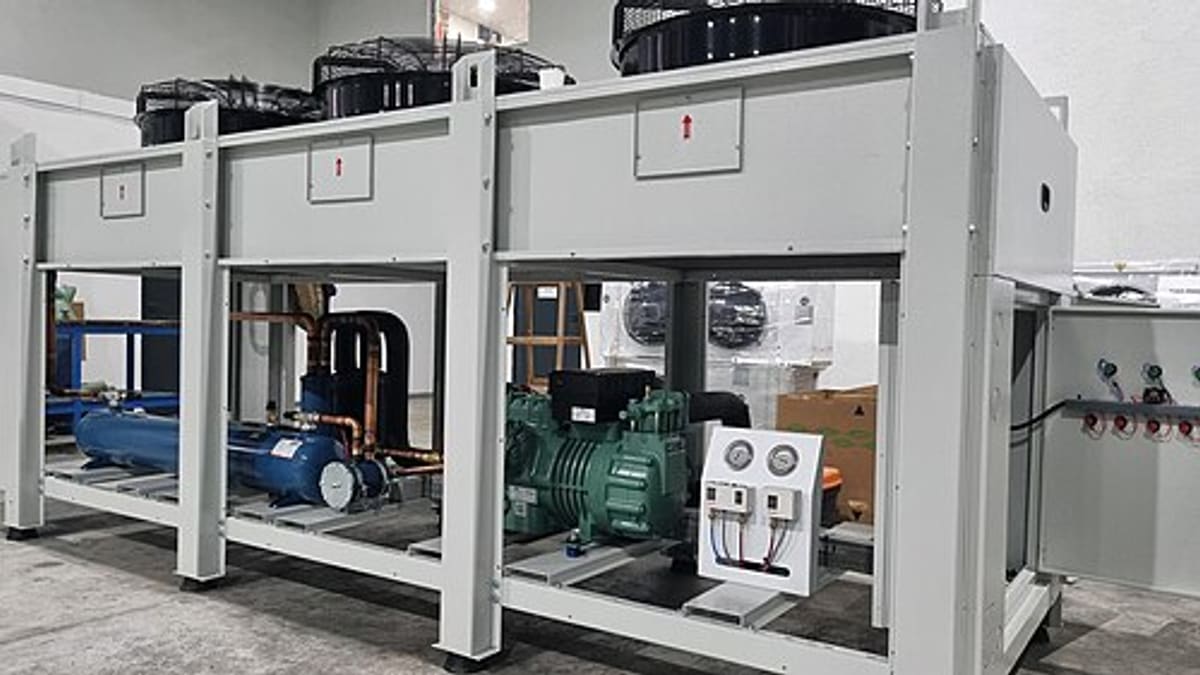
Refrigeration failures are expensive: a failed cold room can spoil an entire stock of food, medicines or flowers within hours. Refrigeration contractors and cold storage service companies maintain compressors, condensing units, evaporators, display cases, blast freezers and cold rooms for supermarkets, restaurants, pharmacies, hospitals, warehouses and food processors. They need fast emergency response, disciplined preventive maintenance and good records of temperatures, pressures and refrigerant use.
The equipment register
Each customer site records refrigeration equipment individually: cold rooms (with size and temperature range), condensing units and compressors, evaporators, display cases, chillers and controllers, with make, model, refrigerant type, serial numbers and installation dates. Accurate registers make diagnosis faster and support replacement planning.
Preventive maintenance
Preventive checklists cover condenser and evaporator coil cleaning, refrigerant pressures, superheat and subcooling where measured, compressor current, oil levels, fan motors, door gaskets and heaters, defrost operation, drain lines, controller settings and alarms. Readings recorded at each visit form a trend that reveals developing problems.
Temperature and pressure logs
Customers in food and pharma often keep their own temperature logs. Service records that include cold room and display case temperatures, and pressures at each visit, complement those logs and help demonstrate good maintenance. Where monitoring systems or data loggers provide data, it can be linked to equipment records.
Emergency breakdowns
Refrigeration emergencies need immediate action. On-call rosters ensure someone is available at all hours; priority rules escalate cold room failures; technicians see equipment history and likely parts before arriving. Response and restoration times are recorded for SLA reporting.
Refrigerant management
Refrigerant added or recovered is recorded per job with type and quantity. This supports billing, identifies systems with repeated leaks, and helps customers and service companies meet their environmental obligations, which remain their responsibility.
Supermarkets and multi-site customers
Supermarkets have dozens of display cases, cold rooms and rack systems per store. Chains want consistent service and reporting across stores. A customer portal and consolidated reports — breakdowns, response times, energy-related observations — help chains manage their refrigeration estate.
Spare parts
Compressors, fan motors, expansion valves, controllers, contactors, gaskets and refrigerant cylinders are tracked in stock and in vans. Linking parts to compatible equipment speeds repairs.
Installation projects
New cold rooms and refrigeration systems are projects: design, panels, refrigeration piping, electrical, commissioning and handover with temperature pull-down tests. Tracking each stage and recording commissioning data creates a strong baseline for future service.
Common problems this software solves
- Slow emergency response outside office hours.
- Preventive coil cleaning and checks skipped.
- Refrigerant use not recorded.
- No trend data to predict failures.
- Inconsistent service across a chain's stores.
KPIs to track
- Emergency response and restoration time.
- Preventive visits completed on schedule.
- Repeat breakdowns per equipment.
- Refrigerant added per system per year.
- AMC renewal rate.
Corposol builds refrigeration service software. Talk to us.
Pharmaceutical and healthcare cold storage
Pharmacies, hospitals and vaccine stores depend on reliable cold storage within narrow temperature ranges. Their own quality systems require evidence of maintenance and temperature control. Service companies supporting them benefit from detailed visit records, calibrated thermometers recorded against each visit, and fast escalation for alarms. These records support the customer's compliance, which remains their responsibility.
Energy efficiency opportunities
Dirty coils, worn door gaskets, faulty defrost and incorrect settings increase energy consumption significantly. Recording these findings during visits — and quantifying them where possible — gives customers clear reasons to approve repairs, and positions the service company as a partner in reducing operating costs rather than just a repair contractor.
Replacement planning
Older systems with frequent breakdowns, refrigerant leaks or obsolete refrigerants are candidates for replacement. With equipment age, breakdown history and refrigerant usage in one place, service companies can propose replacements with evidence, helping customers budget and avoid emergency failures.
A practical rollout
Start by registering equipment at your largest and most critical customers, set up emergency priorities and on-call rosters, and give technicians the app with checklists and readings. Within a month, emergency response times and preventive compliance become visible; within a few months, readings across visits reveal the equipment most likely to fail next. Add refrigerant tracking, customer portals and replacement proposals once the basics are working, and extend to all customers.
Working with monitoring providers
Many cold rooms already have temperature monitoring from third-party providers. Rather than replacing it, service software can receive alarm emails or, where providers offer an API, alarm data — creating tickets automatically. Monitoring costs and integrations depend on the provider and are borne by the customer.
Frequently asked questions
Can temperature alarms create service tickets?
Where monitoring systems or data loggers provide an interface or email alerts, alarms can create tickets automatically; otherwise customers report via app, phone or WhatsApp.
Can technicians record refrigerant usage?
Yes. Refrigerant type and quantity added or recovered are recorded per job, supporting both billing and the customer's records.
Can we manage supermarkets with many display cases?
Yes. Each display case, cold room and condensing unit can be recorded as equipment under the store, with its own history.
Can preventive visits include coil cleaning and leak checks?
Yes. Checklists per equipment type include coil cleaning, leak checks, pressures, temperatures, electrical checks and defrost verification.
Can emergency calls be handled 24×7?
Yes. On-call rosters, priority rules and escalation make sure emergency calls reach an available technician at any hour.
Can customers see temperature and service history?
Yes, through service reports and a customer portal showing visits, readings and open issues.
Can on-call rosters be managed in the system?
Yes. On-call technicians by day and region are defined in advance, and emergency calls outside office hours are routed to them automatically with escalation if not acknowledged.
Can we see which systems leak refrigerant repeatedly?
Yes. Refrigerant added per system over time highlights repeat leakers, so repairs or replacements can be proposed with evidence.


