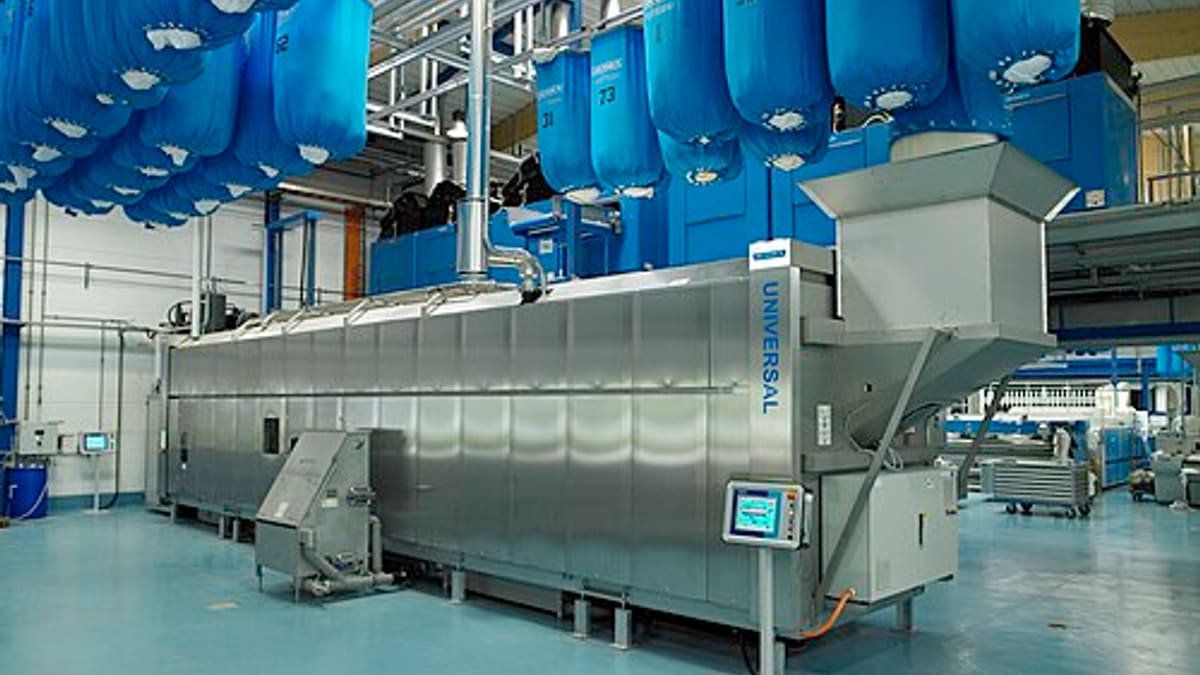
Commercial laundries, hotel and hospital on-premise laundries and laundromats depend on heavy-duty equipment: washer extractors, tumble dryers, flatwork ironers, folders, presses and chemical dosing systems. These machines run long hours under heavy loads, and downtime quickly creates backlogs of linen that hotels, hospitals and restaurants need daily. Service companies that maintain this equipment need fast response, preventive maintenance and good records across many customers.
The laundry equipment service workflow
- Installation — machines registered with model, capacity, utilities and commissioning checks.
- Preventive maintenance — by time, hours or cycles.
- Breakdown calls — door locks, drain faults, heating failures, bearing noise, control errors.
- Spare parts — door seals, bearings, belts, heating elements, valves, control boards.
- Chemical systems — dosing pumps and calibration.
- Reports and renewals.
Equipment register
Every machine is recorded with site, make, model, capacity, serial number, utilities (electric, steam, gas), installation date and warranty. For large laundries with many machines, each has its own history. Technicians see the full equipment list for a site before visiting, and planners can see the age and condition of a customer's fleet.
Preventive maintenance by usage
Laundry machines wear by usage. Bearings, seals, belts and door locks have lives measured in cycles or hours. Recording cycle counts or hours at each visit — or capturing them from controllers where possible — lets maintenance be scheduled at the right time. Checklists cover door seals and locks, drain valves, water inlet valves, bearings and vibration, belts, heating elements or steam valves, lint filters and exhaust (dryers), roller covers and padding (ironers), and safety interlocks.
Breakdown management
A failed washer extractor in a hospital laundry is urgent; one of many dryers in a large laundry may be less so. Priority rules based on customer and machine criticality, SLA timers and escalation ensure the right calls are handled first. Technicians record faults, causes and parts used, building knowledge about common failures by model.
Chemical dosing systems
Automatic dosing systems deliver detergents and chemicals to washers. They need periodic calibration, tube and pump maintenance and checks that dosing matches wash programs. Recording these as equipment with their own checklists ensures they're maintained alongside the machines — poor dosing affects wash quality, linen life and machine condition.
Spare parts and van stock
Common spares — door seals, bearings, belts, drain valves, solenoid valves, heating elements — are tracked in stock and in vans, linked to compatible models. This reduces return visits and supports accurate billing.
Utilities and installation checks
Many laundry problems are caused by utilities: water pressure, steam supply, drainage capacity, exhaust ducting, electrical supply. Installation and service checklists that include utility readings help technicians identify these causes quickly and advise customers.
Technician app
The app gives technicians job details, machine history, manuals and parts lists, checklists, readings, photos and customer sign-off. Offline access is important in plant rooms and basements. See technician app features.
AMCs and fleet proposals
AMCs define preventive visit frequency and coverage. With machine age and breakdown history in one place, service companies can propose replacements or overhauls at the right time — valuable for customers and a natural sales opportunity. See AMC management.
Common problems this software solves
- Preventive maintenance done by calendar, not by usage.
- Dosing systems forgotten until wash quality complaints arrive.
- Return visits for missing parts.
- No history to support replacement proposals.
- Slow response to critical laundries.
KPIs to track
- Machine uptime per customer.
- Breakdown response and repair time.
- Preventive maintenance compliance.
- Repeat failures by model.
- Parts and AMC revenue.
Corposol builds laundry equipment service software. Talk to us.
Supporting hospital laundries
Hospital laundries handle infection-sensitive linen and often operate continuously. Breakdowns can disrupt clinical operations, and maintenance records support the hospital's own infection-control and facility audits. Service companies serving hospitals benefit from strict priority rules, detailed preventive records and monthly reports that the hospital's facility team can file directly. Recording wash temperatures and dosing checks during visits adds evidence that machines are performing as intended.
Energy and water efficiency
Laundries are heavy users of water, energy and steam. Recording consumption-related readings during visits — water fill levels, temperatures, drying times — and identifying machines that consume more than expected helps customers reduce costs. It also gives service companies a strong case for upgrades and retrofits that pay back through savings.
Frequently asked questions
Can maintenance be scheduled by machine cycles or hours?
Yes. Cycle counts or running hours recorded at visits — or captured from machine controllers where they provide data — can trigger preventive tasks at the right interval instead of fixed dates.
Can we track chemical dosing systems too?
Yes. Dosing pumps and chemical systems can be recorded as equipment with calibration checks, tube replacements and their own maintenance history.
Does it support hospital and hotel laundries?
Yes — on-premise laundries in hotels and hospitals and large commercial laundries, each with its own sites, equipment registers and service agreements.
Can technicians access manuals on site?
Yes. Manuals, wiring diagrams and parts lists can be attached to each machine model and opened from the technician's app, even offline if downloaded.
Can we see which machines break down most?
Yes. Breakdown history by machine, model and fault type highlights problem units and common failures, supporting overhaul or replacement proposals.
Can customers see service history?
Yes, through a customer portal or service reports sent after every visit, so laundry managers always know what was done and when.
Can we record wash temperatures during visits?
Yes. Temperature and dosing checks can be part of the checklist, giving customers evidence that machines and chemicals are performing as intended.
Can we propose replacements based on data?
Yes. Machine age, breakdown frequency and repair costs are shown together, so replacement proposals are backed by the customer's own service history.