
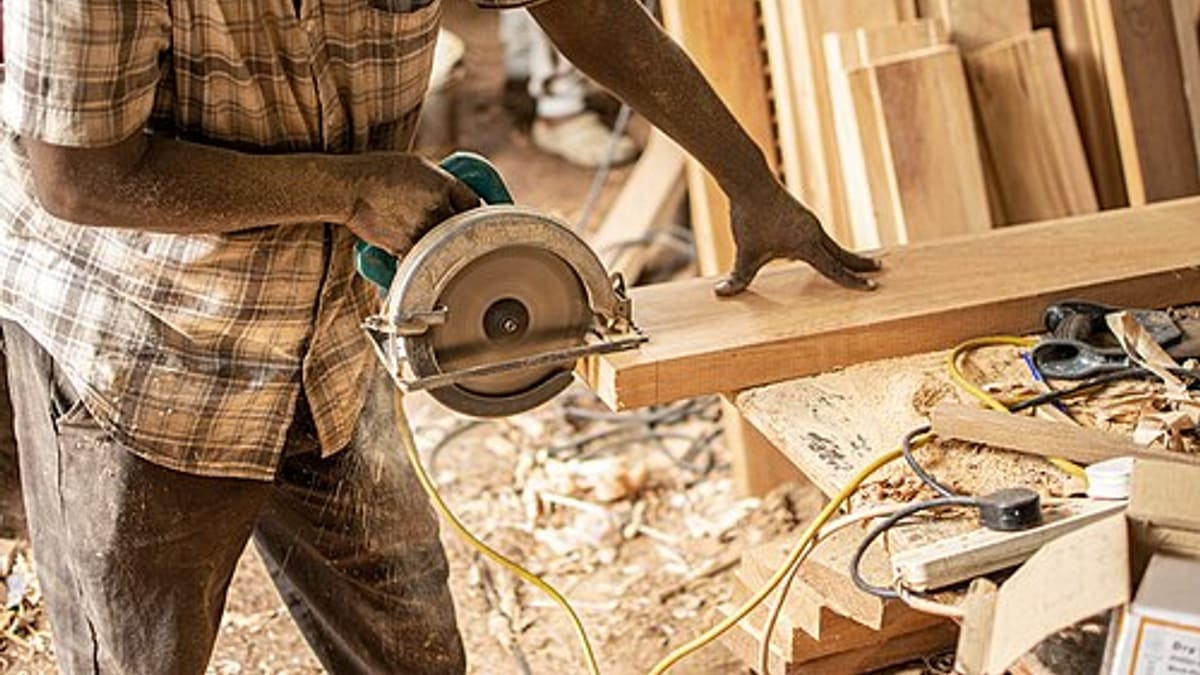
Carpentry and woodwork businesses do everything from fixing a broken hinge to building a full kitchen or a wall of wardrobes. They combine field service (repairs and installations at customers' homes and offices) with workshop production (custom furniture and joinery). Managing both — with measurements, designs, materials, production stages and installers — on paper leads to errors, delays and thin margins.
Two kinds of work
Repair and maintenance jobs — door alignment, hinge and channel replacement, lock fitting, furniture repair — are short visits that need fast scheduling. Custom orders — wardrobes, kitchens, beds, shelving, office furniture — go through measurement, design, quotation, production and installation. Software should support both flows.
Site measurements
Accurate measurements prevent remakes. Recording dimensions, wall and floor conditions, electrical and plumbing points and photos on site gives designers and the workshop reliable information.
Design and approval
Designs, materials, finishes and hardware are shared with customers for approval. Recording approval before production prevents disputes later.
Quotations
Quotes built from material rates, hardware prices and labour estimates are consistent and quick. Options for different materials or finishes help customers decide.
Workshop production
Orders move through cutting, edge banding, assembly, finishing and packing. Tracking stages per order shows workshop load and delivery dates. Panel labels help match parts at installation. See furniture manufacturing software.
Materials
Boards, laminates, veneers, hardware and finishes are estimated and issued per order. Comparing actual usage with estimates improves future quotes and reduces waste.
Installation and snags
Installers receive drawings and packing lists, record progress and photos, and log snags for closure. Customer sign-off triggers final billing.
After-sales service
Hinge adjustments, channel replacements and repairs after installation are logged against the original order, building a history and supporting warranty decisions.
A practical rollout
Start with repair job dispatch and site measurements, then custom order stages, materials and installation tracking.
Common problems this software solves
- Measurement errors causing remakes.
- Design disputes after production.
- Workshop delays without visibility.
- Material waste and over-ordering.
- Snags delaying payments.
KPIs to track
- Remakes per month.
- Order lead time.
- Material usage versus estimate.
- Repair jobs per carpenter per day.
- Snags per installation.
Corposol builds carpentry business software. Talk to us.
Commercial and office projects
Offices, retail stores, restaurants and hotels commission carpentry at larger scale: workstations, storage, reception counters, display units, wall panelling and doors. These projects come with drawings from designers, tight timelines and coordination with other trades. Tracking each item by area or floor — design approval, production status, delivery and installation — keeps commercial projects on schedule. Staged billing linked to completed items keeps cash flowing, and photos at each installation milestone give clients confidence without site visits.
Hardware and fittings management
Hinges, channels, handles, lift-up mechanisms and locks vary in quality and price, and customers often choose specific brands. Recording hardware per order, keeping stock of common items and tracking supplier lead times for special fittings prevents installation delays. When hardware fails later, the record shows exactly what was installed, making replacement straightforward and warranty claims with suppliers possible.
Pricing that reflects reality
Comparing actual workshop hours, installation time and materials with quoted values per order reveals which product types and finishes are profitable. Many carpentry businesses discover that certain designs or finishes consistently overrun and can adjust prices or methods accordingly.
Building a reputation
Carpentry businesses grow through referrals. Photos of completed work, organised by product type, make a ready portfolio for new customers, and follow-up visits after installation to adjust doors and drawers show care that customers remember and recommend.
Getting started
Most carpentry businesses start by putting repair jobs and site measurements into one system, because these cause the most day-to-day confusion. Custom order stages, materials tracking and installation snags follow. Within a few months, the business has a clear record of every job, a portfolio of completed work and data to price future orders with confidence instead of instinct.
Frequently asked questions
Can small repair jobs and custom orders be managed together?
Yes. Quick repair jobs follow a dispatch workflow, while custom orders follow measurement, design, production and installation stages.
Can site measurements be recorded with photos?
Yes. Dimensions, wall conditions, existing fittings and photos are recorded on site for accurate quotes and production.
Can workshop production be tracked by stage?
Yes. Cutting, assembly, finishing and packing stages are tracked per order.
Can materials be estimated and tracked?
Yes. Boards, laminates, hardware and finishes are estimated per order and issued, with actual usage recorded.
Can installation snags be recorded?
Yes. Snags are recorded with photos and closed before final payment.
Can customers approve designs before production?
Yes. Design drawings and finishes are shared for approval, which is recorded before work begins.
Can commercial projects be tracked item by item?
Yes. Workstations, storage units, counters and panels are tracked by area or floor through approval, production, delivery and installation, with staged billing linked to completed items.
Can hardware brands per order be recorded?
Yes. Hinges, channels, handles and other fittings are recorded per order, so replacements and warranty claims are straightforward later.
Can completed work photos be used as a portfolio?
Yes. Installation photos are organised by product type and can be shared with prospective customers as examples of your work.
Can repair calls be booked online?
Yes. Customers can book repair visits through a link or WhatsApp with photos of the problem, so carpenters arrive with the right hardware and tools, which reduces return visits.
Can after-sales adjustments be linked to the original order?
Yes. Adjustments and repairs after installation are logged against the original order, building a history that supports warranty decisions.
Can workshop load be seen at a glance?
Yes. Orders by stage show the workshop's current and upcoming load, helping give realistic delivery dates to new customers.


